By: Prof. William A. Schabas, OC MRIA
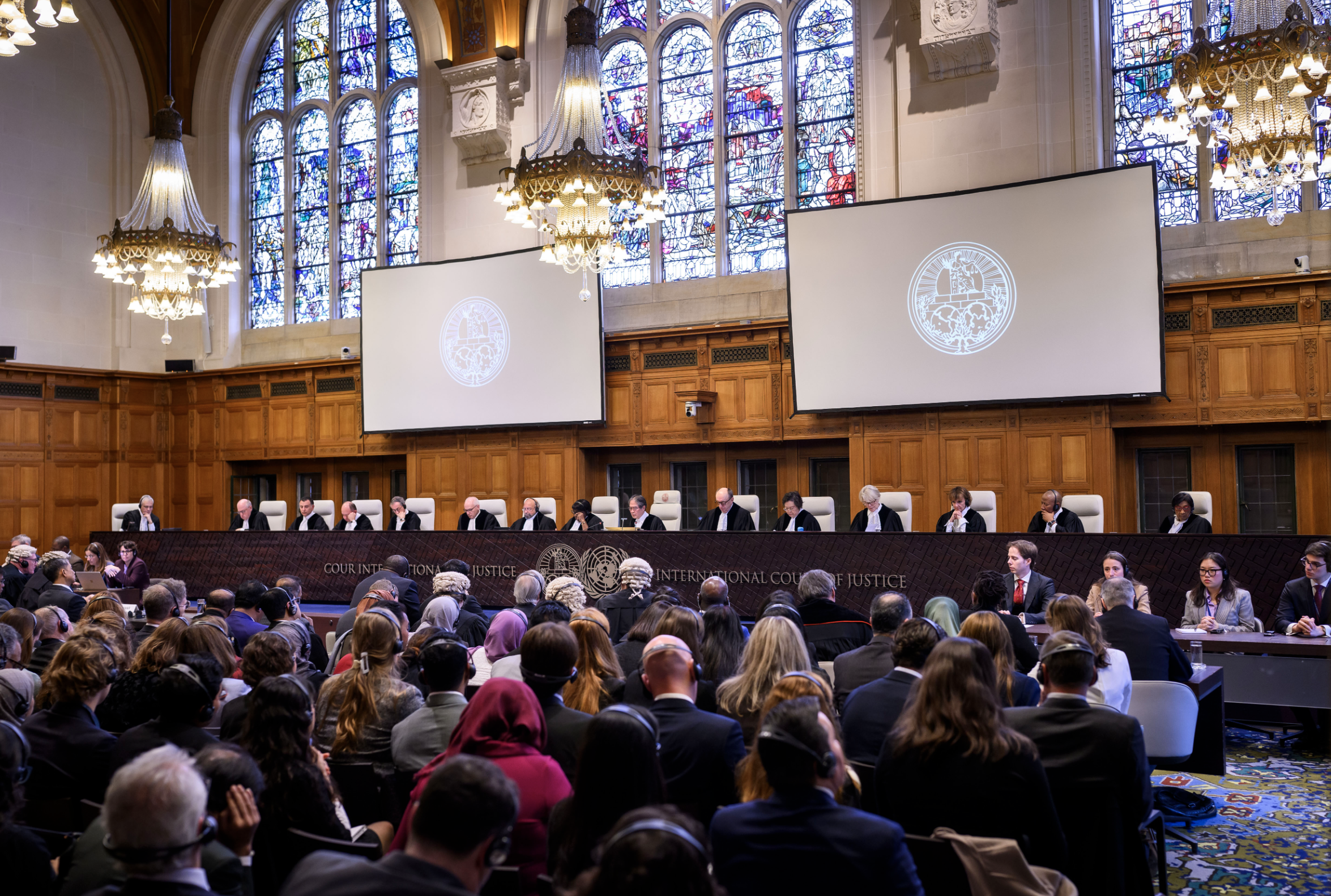
November 24, 2026: The Genocide Convention is alive and well. On November 19, 2026, it received a huge dose of adrenaline from the International Court of Justice (ICJ). In a judgment that history will view as one of its greatest, the Court held that by attacking and persecuting the Rohingya minority, Myanmar had breached the Convention on the Prevention and Punishment of the Crime of Genocide. This was the first time since the Convention entered into force in 1951 that a State was condemned for perpetrating genocide. With four other pending cases based on the Convention, two of them concerning charges of genocide in Gaza, it is unlikely to be the last.
The judgment makes important legal innovations. First and foremost, it adjusts the test for genocidal intent where proof depends solely upon circumstantial evidence. Henceforth, genocidal intent may be inferred from a pattern of conduct even if another intent or motive, such as fighting a terrorist group or punishing a population, also appears as a reasonable inference, to the extent that genocidal intent constitutes the only reasonable conclusion based upon the ‘totality’ of the evidence. In practical terms, the judgment facilitates proof of genocide and broadens the cases and situations in which the Convention can be said to apply.
The case against Myanmar was submitted to the Court in 2019 by Gambia, acting at the behest of the Organization of Islamic Cooperation (OIC). The predominantly Muslim minority Rohingya minority has been subjected to decades of abuse. The government’s response to attacks in 2017 by an armed group of Rohingyas known as the Arakan Rohingya Salvation Army (ARSA) was horrific. This provoked huge displacement as 750,000 Rohingya fled to neighbouring Bangladesh where most remain to this day.
In its judgment, issued on November 19, 2026, the Court ordered a number of measures involving restitution and compensation to the Rohingya, including facilitating their return to Myanmar and various reparations for the injury and damage they have suffered. Myanmar has been given two years to report to the Court on the measures it has taken. With one exception, the Court declined finding that Myanmar had breached the provisional measures ordered in January 2020. States have often defied such orders, leading critics to dismiss their significance. But to the extent the Court did not consider that Myanmar had violated the main orders, the case suggests a more positive view of the significance of provisional measures.
This was the third time the Court had ruled on the merits of an application under the Genocide Convention. In 2007, the Court dismissed a charge of genocide directed at Serbia by Bosnia and Herzegovina. Eight years later, in 2015, a genocide case filed by Croatia against Serbia ended in the same way. The rulings were inspired by judgments of the International Criminal Tribunal for the former Yugoslavia (ICTY), which systematically rejected charges of genocide with one great exception, the 1995 massacre at Srebrenica. In the Myanmar case, the result might well have been different had it stuck to the letter and the spirit of its earlier rulings.
Of the 15 judges who heard the case, six wrote a robust dissent, rejecting the new approach to proof of genocidal intent and contending that there was no good reason to make changes to the jurisprudence. Four of the dissenters had been on the bench in 2015 when Croatia’s case against Serbia was dismissed, and it was asking a lot to expect them to overturn their ruling barely a decade earlier. The nine judges of the majority were all elected subsequent to the Croatia judgment. They were also blessed with the presence of Navi Pillay, who was designated by Gambia as its ad hoc judge, and who only weeks before the judgment was awarded the Nobel Peace Prize.
Gambia faced a serious challenge in providing evidence to support its case. In earlier cases, an evidentiary foundation was provided by judgments of the International Criminal Tribunal for the former Yugoslavia. Witnesses before the Tribunal were subjected to skilled cross-examination, and their testimony was assessed by experienced criminal court judges applying a very high standard of proof. But there was no international criminal tribunal for Myanmar. The evidence consisted largely of reports by United Nations expert bodies. The Court nevertheless considered that these materials were reliable, noting their rigorous methodology and the impartiality of their members.
The Myanmar judgment of November 19, 2026 is part of a larger phenomenon. Since the late 2010s, the International Court of Justice has focused on a range of human rights issues. This is a big shift for an institution that historically spent much of its time adjudicating disputes about fishing zones, land borders, and diplomatic immunities. Several States, including Canada, now submit cases to the Court where, like the Gambia, they have suffered no injury themselves but choose to act in the common interest of enforcing international law. In international law jargon, we say they are acting erga omnes. But the phenomenon is not confined to States that actually file cases. It is also manifested in a phenomenal number of interventions. Until 2022, there had been only a very few examples of States intervening in cases at the Court. In the past four years, there have been more than 60 interventions.
Canada is among the active participants in this process. In the Myanmar case, Canada and five other Western countries jointly submitted a detailed intervention analyzing the relevant provisions of the Genocide Convention. Many of the ideas in the intervention are reflected in the Court’s judgment. For example, the intervention by Canada et al. argued that evidence of genocidal intent could be found in the persecution of large numbers of children, in sexual and gender-based violence, and in forced displacement. It also contended that fact-finding reports by UN Commissions could provide compelling evidence.
The Court’s judgment on November 19, 2026, will have a major impact on pending cases under the Genocide Convention. Many of the factual elements dwelled upon by the Court, including the victimization of children, the destruction of homes, hate speech, and displacement, all feature in the allegations South Africa has made against Israel. The ‘totality’ test for intent is an answer to the excuse that the violence of the Israel Defense Forces (IDF) is intended to suppress terrorism or to punish the Palestinians. It is hardly a surprise that newspapers in Israel have warned of big trouble at the ICJ as a result.
Somewhat unexpectedly, because it was not an issue disputed by Gambia and Myanmar, the Court reversed a rather puzzling view it had taken in earlier cases regarding the obligation to prevent genocide. In the cases submitted by Bosnia and Croatia against Serbia, the Court said that an obligation to prevent genocide arose when there was a serious risk the crime would be committed. However, this important and innovative position was weakened by attaching to it the condition that there could be no finding that the Genocide Convention was violated unless genocide actually took place. In its judgment in the Myanmar case, the Court overturned this precedent, explaining that ‘the obligation to prevent genocide does not allow a State that is in a position to act in the face of a serious risk of genocide to remain idle and gamble that the risk might not ultimately materialize’.
This change is likely to have an immediate impact on proceedings currently pending in which Nicaragua has charged that Germany failed to use its influence and authority to persuade Israel, with which it is closely allied, to halt its attacks on Palestinians. In hearings in September 2026, Germany claimed that Nicaragua’s claim should be dismissed because it had not proven that Israel had actually perpetrated genocide, nor could it do so given Israel’s absence in the proceedings. The Court has rejected Germany’s position and, in doing so, sent a powerful message to States. When there is a serious risk of genocide in another countries, and where they are in a position to influence that country’s conduct, they must take action, individually and collectively.
The judgment must be the longest ever issued by the Court. It amounts to 460 pages, more than 200,000 words, and a blog post cannot do it justice. The rather ancient convention, with its sometimes archaic terms, has just been reinvigorated. At a difficult moment, when some bemoan the decline and even the disappearance of international law, this judgment points in another direction. Not only is international human rights law capable of considerable dynamism, but it is also being helped by an extraordinary court that seems unbowed by threats from powerful countries who prefer a world that bows to wealth and power rather than one directed to peace and justice.