By: Dr. Sabah Carrim
Defense attorneys often resort to any evidence that may favor their client. Over the last three decades, neuroscientific evidence has increasingly been introduced in courts internationally, particularly in the United States and Europe. However, the admission of such evidence does not necessarily translate into its acceptance by the court. Cases with little to no chance of success have had defense counsel claiming that a murder suspect was influenced by pesticides that interfered with hormone-producing substances in the brain, which in turn prevented him from calming down in an altercation. Or that brain surgery following the detection of a tumor interfered with the behavior of their client, who subsequently planned the murder of their husband. None of this evidence however has been deemed cogent enough or scientifically sound to justify an acquittal or a lesser penalty.
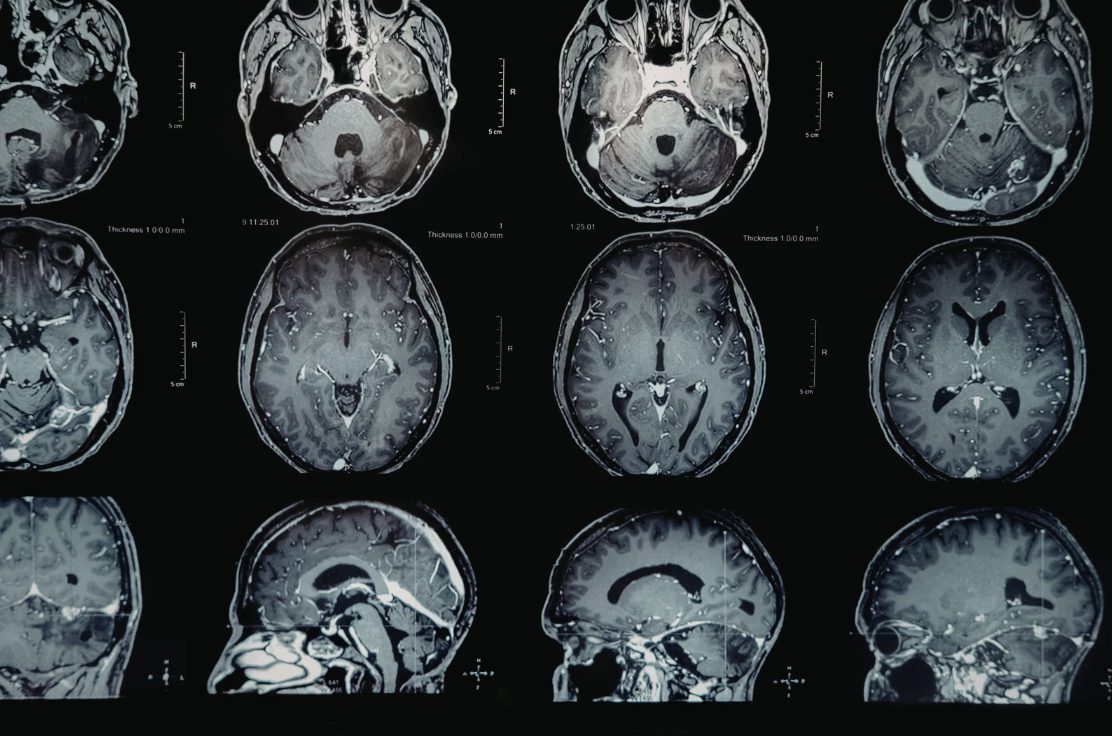
The use of neuroscientific evidence coincides with the relatively recent appearance of state-of-the-art neuroimaging devices that can detect neurological processes and anomalies. Functional Magnetic Resonance Imaging (fMRI) detects changes in blood oxygen levels in the brain while Electroencephalography (EEG) detects electrical neural activity. Brain Electrical Oscillation Signature Profiling (BEOS), another non-invasive technique, detects brain electrical changes related to stored memories of a crime and has been relied upon in an Indian court to convict a murder suspect. Neuroscientific evidence has also been successfully raised and has created entirely new judicial and legal precedents. Roper v. Simmons, decided by the U.S. Supreme Court, led to the abolition of the death penalty for juveniles and its replacement with life imprisonment without parole. This groundbreaking precedent influenced later cases and further reduced the severity of penalties imposed on juvenile offenders. Evidence from developmental brain science revealed that adolescents are more prone to criminal behavior because of their immature prefrontal cortices that attain full maturity only in their mid-twenties. In People v. Weinstein, a 65-year-old advertising executive in New York strangled his wife and threw her body out of the window of their 12th floor apartment to make it look like a suicide. The court decided on a reduced sentence after being shown brain images of the large arachnoid cyst in his frontal lobe which purportedly impaired his judgment and impulse control.
The brain-behavior nexus is by now well established. The famous 1848 case of Phineas Gage is widely cited as an early illustration of the relationship between brain injury and behavioral change. A railway worker in New Hampshire, Gage suffered a catastrophic accident when a tamping iron shot through his skull as a result of an explosion. Although the injury did not kill him, it reportedly led to profound personality and behavioral changes. In 1981, John Hinckley Jr. attempted to assassinate President Ronald Reagan and was later institutionalized rather than imprisoned after successfully raising an insanity defense linked to schizophrenia. Brain scans introduced in court revealed enlarged sulci that were believed to be associated with the condition.
Today, neuroscience also helps explain why adolescents are more prone to impulsive behavior, volatility, and susceptibility to peer influence than adults; how reward circuits operate in daily life and shape decision-making; and how brain injuries can affect mood and behavior in ways that were previously poorly understood. Yet research in neuroscience remains far from definitive and continues to raise as many questions as answers. For instance, false positives are possible. Hinckley’s enlarged ventricles, once thought to support a diagnosis of schizophrenia, are now known not to constitute definitive proof of the condition. Similarly, the brains of patients suffering from Alzheimer’s disease can differ significantly from one individual to another. Cysts or tumors may also exist in major functional regions of the brain without necessarily producing behavioral anomalies.
While different types of neuroscientific evidence have been introduced in local and state courts across several countries the question that arises in the study of genocide is whether similar defenses will eventually be raised in genocide trials. The Ugandan child soldier Dominic Ongwen, charged with war crimes and crimes against humanity, and tried in 2015 and 2022 at the International Criminal Court (ICC), is a case in point. Neuroscientific evidence was introduced by both the defense and the prosecution to elucidate the impact that his violent and traumatic childhood as an abductee of the brutal LRA regime would have had on his criminal behavior as an adult. While the prosecution used such evidence to establish his culpability, the defense relied on it to seek a reduced sentence, if not a quashed conviction, portraying Ongwen as a victim of his environment whose traumatic experiences shaped his neurological development, and hence, aggressive behavior. Today, scholars, legal practitioners, and human rights advocates remain divided as to whether Ongwen deserved the full sentence of twenty-five years for the crimes he committed—including abduction, rape, and murder—or whether his status as a victim-perpetrator warranted a reduced sentence.
It is not difficult to imagine a comparable perpetrator—not of armed conflict but genocide— evoke a neurolaw-based defense to explain or mitigate such crimes. While this would have been an impossibility for Holocaust perpetrators tried at Nuremberg in 1948, the situation would be different today because of the availability of neuroimaging devices and the increasing recognition of such evidence in courts. Moreover, we live in an era in which genocidaires are increasingly brought to justice before specialized tribunals established to prosecute crimes of genocide. The Gambia v. Myanmar illustrates how states may invoke obligations under the Genocide Convention: in 2019, The Gambia filed a case before the International Court of Justice alleging that Myanmar committed genocide against the Rohingya population. Further, the principle of universal jurisdiction has also enabled national courts to prosecute perpetrators of international crimes even when the crimes were committed abroad. For example, French courts have initiated proceedings against nationals affiliated with ISIS for the genocide committed against the Yazidi population in Syria and Iraq. With all this in mind, it is not difficult to envisage a future in which, alongside more conventional defenses, defendants in genocide trials raise neurolaw-based arguments.
Before legal reasoning developed in domestic criminal cases is applied to genocidaires, important distinctions must be drawn between ordinary crimes such as murder and extraordinary—and inherently political—crimes such as genocide. Such distinctions allow for a more careful assessment of which neurolaw arguments, if any, might plausibly apply in genocide trials. Unlike ordinary crimes that may arise from impulsive or emotionally driven acts, genocide typically involves extensive planning and coordination across multiple levels of authority, sustained ideological commitment, and collective participation over time. It mobilizes a wide range of perpetrators occupying different ranks within a bureaucratic or military hierarchy, creating a complex machinery of violence in which individuals may function as “desk murderers,” as exemplified by Adolf Eichmann, or as mere cogs within a vast administrative system. Through bureaucratic distance and division of labor, many perpetrators are removed from the physical act of killing and may therefore perceive themselves as only partially responsible for the atrocities committed.
This structural and bureaucratic nature of genocide raises difficult questions for the application of neurolaw defenses. The diffusion of responsibility within genocidal systems complicates attempts to attribute criminal behavior solely to individual neurological impairment or trauma. Consequently, while neurolaw may provide useful insights into individual cognition, behavior, and mechanisms such as obedience to authority, its explanatory power may be limited when applied to crimes that are fundamentally collective, political, and institutionally organized. Whether neuroscientific evidence can meaningfully mitigate the criminal responsibility of genocidaires therefore remains an open—and deeply contested—question. Defense attorneys, for their part, will likely continue to introduce such evidence, and it will be our task to police their use and abuse of such evidence.
Another important context in which neuroscientific evidence may be relevant to genocide trials is in determining competence to stand trial: perpetrators are often elderly and suffer from age-related illnesses by the time they are tried. Gustav Krupp, Augusto Pinochet, and Ieng Thirith are examples of genocide perpetrators whose advanced age raised legal and ethical dilemmas about their capacity to face criminal charges. All three were released on the grounds that neurological disorders prevented them from being competent to stand trial. The inclusion of neuroscientific evidence to replace or to supplement psychological evidence would reinforce the conclusions drawn at various junctures of competence assessments.
Ultimately, the aim of this research—compiled in an upcoming monograph, “Neurolaw Defences in Genocide Trials”—is to provide conceptual tools for critically evaluating neuroscientific evidence when they are eventually evoked in genocide trials.