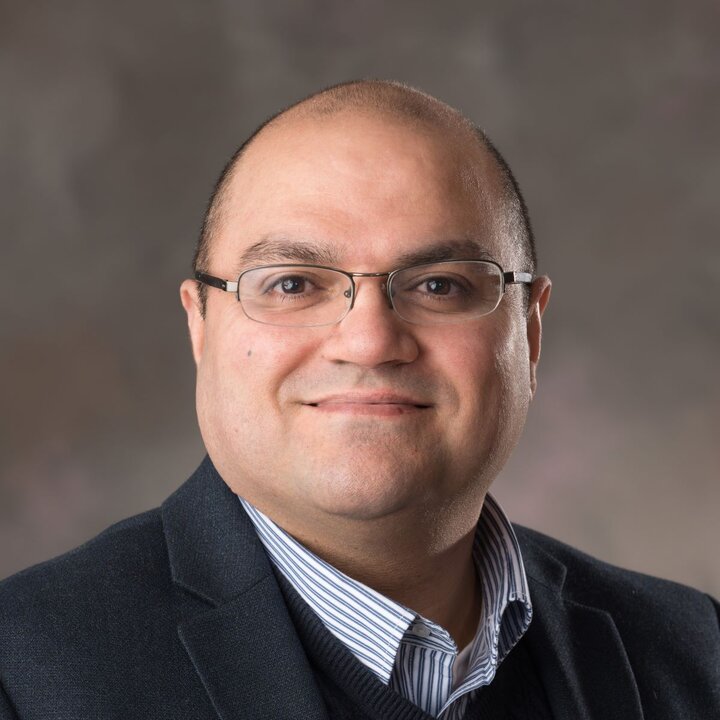
Interviewer: Greg Sarkissian, President of the Zoryan Institute
Interview
Conducted on July 14, 2026
Zoryan:
Prof. Der Matossian, thank you very much for agreeing to speak with the Institute today from Jerusalem to provide some insight into the challenges that Armenians are facing in the region. The Institute was recently sent a video from a Turkish public broadcast service, TRT World, which reports on the blatant mistreatment of Christian clergy, nuns, and civilians in the Armenian quarters located in East Jerusalem. We would like to hear your opinion on this video.
Prof. Bedross Der Matossian:
The video is on point in depicting the persecution and harassment of Armenians and community members in East Jerusalem at the hands of ultra-nationalist religious groups. However, I wonder why they have not produced a documentary depicting the persecution of Christians over the past 150 years in the Ottoman Empire and modern Turkey.
I welcome efforts to raise awareness about the persecution of Christians and other minorities in countries such as Israel. At the same time, it would be fair and consistent to acknowledge the persecution, decimation, and, in many cases, annihilation suffered by the Armenian, Greek, and Assyrian populations of the Ottoman Empire and later the Republic of Turkey.
These communities experienced genocide, discrimination, forced displacement, massacres, and other forms of persecution under both the late Ottoman and modern Turkish states. A balanced historical account should recognize the suffering of all affected groups rather than focusing selectively on one case.
Zoryan:
Could you provide our readers with some more context when you are comparing the Christians in Anatolia versus the Christian population in Israel now?
Prof. Der Matossian:
Yes, take Turkey as an example. The number of Christians was once very high. Millions of Christians lived throughout the Ottoman Empire. In fact, when the Ottoman Empire was established, much of its population was Christian. Over the centuries, however, the Christian population steadily declined, eventually becoming a small minority.
It would be valuable to see more documentaries that examine the genocide of the Armenians, Greeks, and Assyrians during this period.
Turning to Jerusalem, the Armenian community of East Jerusalem has borne a significant share of persecution, discrimination, and intimidation. This has included spitting on clergy, the desecration of sacred sites, and other forms of harassment. Much of this receives little public attention, despite the Armenian Quarter becoming particularly vulnerable because it lies along the route to the Jewish Quarter.
Indeed, many of the incidents we witness—including spitting, harassment by ultra-religious groups, and the desecration of Armenian religious sites—occur in the Armenian Quarter. Its location appears to make it especially susceptible to these acts.
At the same time, it is important not to overgeneralize. These actions are not representative of all Israelis. In fact, following highly publicized incidents, secular Israeli groups have often reached out to express solidarity with the Armenian community, apologize for such behavior, and emphasize that they do not share the attitudes or actions of the ultra-religious extremists responsible for these attacks.
Zoryan:
My question then is, when this is happening the way you described, where is the Israeli government? Where is the military?
Prof. Der Matossian:
Israel does not possess a single written constitution like countries such as the United States, Canada, Germany, or India. Instead, it operates under a constitutional structure based on Basic Laws. None of these Basic Laws explicitly guarantees or safeguards minority rights. This is a distinctive aspect of Israel’s constitutional system. Rather, minority protections are provided indirectly through various sources (Basic Law: Human Dignity and Liberty (1992), Supreme Court rulings, and ordinary legislation).
As in many nations, the main debate centers on the consistency of these protections’ implementation and enforcement, rather than their existence. This pattern has persisted for decades. These groups have repeatedly committed acts of violence—both verbal and physical—against Armenian clergy and community members. When the police intervene, the perpetrators are taken to the station near the Armenian Quarter. The area is covered by surveillance cameras, so the authorities can see exactly what happened. Yet those responsible are often released shortly afterward. At most, they may receive a warning not to repeat the offense or be temporarily barred from entering Jerusalem for a week or so.
However, we are not talking about isolated incidents committed by lone individuals. We are talking about repeated, organized attacks carried out by ultra-religious and settler groups. Their apparent aim is to make life increasingly difficult for the Armenian community. The police, the government, and the IDF have not taken sufficiently strong measures to eradicate this phenomenon. The only effective way to address it, in my view, is to enact and enforce stronger laws and penalties that deter such attacks and hold perpetrators accountable.
As genocide and mass violence scholars have long observed, impunity emboldens perpetrators to commit further acts of violence. That dynamic is evident here. To be clear, we are not talking about genocide or ethnic cleansing. Rather, we are talking about a pattern of systematic harassment, dehumanization, and degradation directed at a religious minority in East Jerusalem. The persistence and apparent increase in these incidents, coupled with what many perceive as inadequate accountability, contribute to a climate of impunity. The Israeli government has either lacked the willingness to confront this problem effectively or has become desensitized to what is happening to the Armenian community in East Jerusalem.
The situation used to be relatively contained, with tensions fluctuating between mild and moderate. Today, however, it has spiraled out of control. The government is led by nationalist right-wing figures, and many settlers and ultra-Orthodox groups appear to feel emboldened by the political climate, believing they have the government’s backing to carry out these acts with impunity.
If similar incidents were taking place anywhere else—such as in Manhattan, Toronto, or Montreal—they would likely attract immediate and widespread media attention. Yet we do not see the same level of coverage when these actions occur in Jerusalem’s Old City. Amid the political climate, the crimes against humanity perpetrated in Gaza, and the escalation of settler violence in the West Bank, the persecution of Armenians in East Jerusalem has largely fallen through the cracks.
Zoryan:
If this is the case, what is the point of calling upon the government of Israel and the Israeli Defense Forces to immediately cease any action that violates international law, including attacks that unlawfully harm civilians of Israel and infrastructure?
Prof. Der Matossian:
I don’t think the IDF has any authority over this. I believe this falls under the jurisdiction of the police. The government needs to take decisive action, and that action should come in the form of legislation passed by the Knesset to prevent incidents like this from occurring in the future.
Zoryan:
Given that Israel is recognized by the United Nations, shouldn’t international governing bodies be able to hold Israel accountable and ensure that international law applies equally to all states?
Prof. Der Matossian:
You are right—Israel should be held accountable for protecting its minority communities. Unfortunately, the current situation is deeply concerning when it comes to the treatment of minorities and other vulnerable groups. That said, it is also important to emphasize that Armenians living elsewhere in Israel, such as in Haifa, Jaffa, and Petah Tikva, do not experience the same challenges faced by the Armenian community in Jerusalem.
Zoryan:
Is what we are witnessing therefore part of a systematic policy in East Jerusalem?
Prof. Der Matossian:
Yes. It is the location of the Armenian Quarter in Jerusalem that makes its residents particularly vulnerable. It is the Armenian Christian identity that is under attack. If there were a broader anti-Armenian ethnic policy across Israel, we would expect to see similar patterns of discrimination and dispossession affecting Armenian communities elsewhere in the country.
However, the situation in the Old City is fundamentally different. Jerusalem is a contested city, and many settlers and ultra-nationalist groups view the Armenian Christian presence in the Old City as an obstacle to the ongoing process of the Judaization of Jerusalem. Within this context, the Armenian Quarter has become a particular target because of both its strategic location and its historic Christian identity.
Zoryan:
Have they taken over any Armenian properties?
Prof. Der Matossian:
They haven’t directly taken Armenian properties. However, since the 1970s and 1980s, the Armenian Patriarchate—or those responsible for managing its real estate at the time—leased some properties to third parties, who eventually sold them to settler groups. As you know, this has led to one of the most significant crises facing Jerusalem’s Armenian community today: the Cow’s Garden dispute.
Zoryan:
What is the fate of other Christian groups in the country? Should the Zoryan Institute issue a call to conduct a transparent investigation into the credible allegations coming out of this?
Prof. Der Matossian:
Yes, it should. I believe institutions should engage with the relevant United Nations bodies that address discrimination, as these are the appropriate mechanisms for combating it. The state of Israel has long supported these institutions, as have many other states around the world. It is true that there is sometimes hypocrisy in how these bodies operate. However, Israel cannot credibly fight discrimination while simultaneously turning a blind eye to similar behavior within its own cities—whether it is anti-Armenian prejudice or anti-Christian discrimination more broadly.
Zoryan:
Dr. Der Matossian, we unequivocally reject anti-Semitism, Islamophobia, anti-Palestinian racism, and anti-Armenian or Christian harassment. We want to be able to freely criticize the government of Israel for what they are doing or not doing, as we would with any other nation committing violations of international human rights laws. Do you think it’s possible to raise awareness on this issue given the complexity of the issue due to the current political environment? Would there be any backlash to raising awareness in the manner you described?
Prof. Der Matossian:
I believe you have an opportunity to raise awareness within academic circles about the human rights violations, discrimination, and impunity faced by one of the world’s most endangered Armenian communities—a community whose numbers continue to decline each year and that is now fighting for its very existence. Today, this Armenian community faces an existential threat, yet the authorities have remained largely passive and have failed to take meaningful action in response to the activities of groups that promote or enable this hostility.
The most effective way to address this problem is through the consistent enforcement of the law, including meaningful penalties for those who incite hatred or violence against another group. Where such conduct violates the law, it should be met with appropriate legal consequences, including imprisonment in serious cases. If Israel considers itself a democratic country that upholds Western democratic values, then it should apply those principles consistently by protecting vulnerable minorities and ensuring accountability for those who engage in unlawful incitement or hate-driven conduct. At present, we are not seeing that level of protection or enforcement.
Zoryan:
Is it possible for international bodies to raise awareness about this issue concerning Christians in Jerusalem without criticism of being quiet about what happened to the Muslim population in Gaza and West Bank?
Prof. Der Matossian:
Many institutions and countries are raising awareness about the crimes against humanity that have been perpetrated against Palestinians in Gaza. But who is speaking out for the Armenians? The Armenian government has proven incapable of adequately protecting its own people. In these circumstances, the responsibility falls to international institutions, human rights organizations, scholars, journalists, and civil society to raise awareness and bring global attention to the plight of Armenians.
Our response, therefore, must be to act. We need to publish well-researched articles, place them in widely read newspapers and journals, and ensure they reach the broader public. Raising awareness is not an end in itself—it is an essential step toward mobilizing international attention, accountability, and meaningful action.
I think we should share this information with organizations such as Human Rights Watch, Amnesty International, B’Tselem, the Association for Civil Rights in Israel, and other relevant nonprofit organizations in Israel. We should also advocate directly with the Israeli government by sending letters. For example, each Zoryan Board member could send an individual letter to the Israeli Knesset and to all Knesset members, expressing our concerns and urging action.
Zoryan:
Prof. Der Matossian, thank you very much for your time today. Before closing this interview, do you have a final statement that you would like to make on this subject?
Prof. Der Matossian:
The Armenians of Jerusalem are facing an existential threat. Their community is steadily declining in number, and their future in the city is increasingly at risk. The international community and human rights organizations must pay greater attention to their situation. There is an urgent need to protect the Armenians of East Jerusalem from harassment, discrimination, the desecration of their religious and cultural sites, and all forms of hate speech. Safeguarding this historic community is essential to preserving Jerusalem’s rich cultural and religious heritage.
VIDEO: TRT World: Jewish Extremist Target Armenian Christians in Occupied East Jerusalem