By: Dr. Setrag Hovsepian
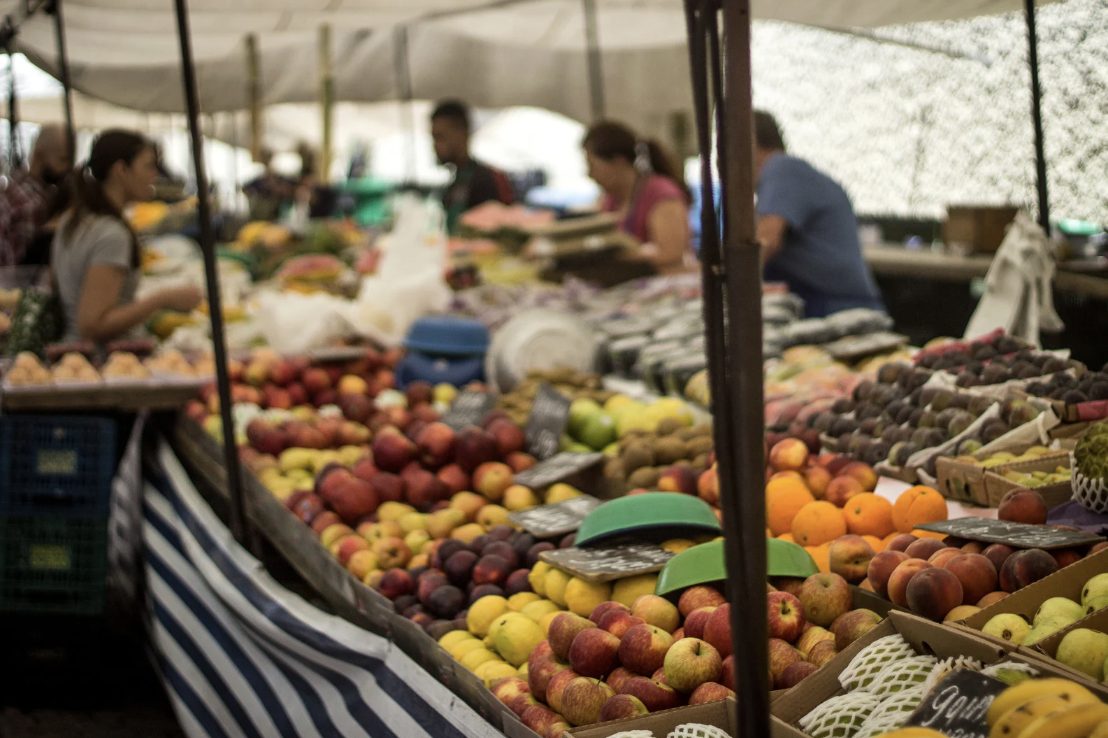
Food security refers to reliable access to sufficient, safe, and nutritious food. While teaching a course on the Middle East, I introduced this concept through food insecurity, drawing on a recent World Food Programme (WFP) assessment of Armenia. The report highlights a striking finding: nearly one in five Armenian households experiences some level of food insecurity.
As soon as I said it, I noticed a student raise an eyebrow and tilt their head—a small gesture, but one loaded with doubt. It lingered with me long after class ended. Was the statistic really so unbelievable?
Later that evening, I returned to the WFP report, reread the data, and compared Armenia’s numbers with those of other countries, including the United States, Canada, and Syria. Syria’s case, sadly, did not offer many surprises. After more than a decade of a devastating conflict, food insecurity remains one of the country’s most urgent humanitarian crises. What unsettled me, however, was how Armenia’s figures, though nowhere near Syria’s, remained remarkably high for a country often perceived as developing quickly or relatively stable.
And then I realized: of course, my student was skeptical. If you live in Yerevan, attend or work at a private university, and spend afternoons in cafés where a cappuccino costs as much as, or sometimes more than, in cities like Paris and Phoenix, it becomes easy to assume that national-level statistics distort the reality. Urban life in the capital can create a carefully curated illusion of prosperity. For those studying or working at private universities and moving primarily within consumption-oriented spaces – such as malls, cafés, and newly developed residential districts – this environment can create a sense of insulation from broader social realities. Such spaces often mask the structural vulnerabilities that shape the everyday lives of many Armenian households, including persistent poverty, unemployment, and inadequate public infrastructure. These challenges are not confined to rural or peripheral regions but are also present within Yerevan itself, where stark inequalities exist between rapidly developing urban enclaves and under-resourced neighborhoods. Beyond these urban growth bubbles, deficiencies in transportation networks, housing, healthcare, and educational infrastructure further compound economic insecurity, reinforcing cycles of exclusion that remain largely invisible to those whose daily routines unfold within more privileged, consumption-driven settings.
That classroom moment made me rethink how I teach such topics. Many students—and, honestly, many policymakers—still equate food insecurity with famine or starvation. But food insecurity is not the absence of food; it is the lack of secure, reliable, and nutritious food. It is uncertainty. It is unstable. It is a vulnerability. And once I started reading more deeply, I saw how much Armenia’s food security challenges exemplify what human security scholars have warned about for decades.
Human Security: A Framework for Everyday Vulnerabilities
The idea of human security, as proposed in late 20th-century scholarship, emerged as a response to traditional notions of security centered solely on state survival. Scholars such as Gunhild Hoogensen Gjørv argue that human security broadens our understanding of vulnerability by focusing on the dignity, autonomy, and everyday well-being of individuals rather than the geopolitical concerns of states (Gjørv, 2012). In parallel, James Gelvin, whose work on the Middle Eastern peoples and societies highlights the insecurities produced not only by war but also by economic inequality and weakened state institutions, reminds us that threats to human wellbeing often begin long before the first shot is fired (Gelvin, 2016).
These perspectives provide a useful foundation for understanding why food insecurity in Armenia should be analyzed not only as an economic or human rights concern, but as a human security challenge that foregrounds vulnerability, risk, and lived insecurity.
Food Insecurity in Armenia: Beyond Availability, Toward Access and Dignity
According to the WFP, roughly 20 percent of Armenian households experience food insecurity, with many unable to consistently afford diets that are both sufficient and nutritious (WFP, 2024a). Armenia does not experience the acute, conflict-driven collapses associated with large-scale civil war in parts of the Middle East. However, as Gelvin’s analysis of insecurity in the region demonstrates, food insecurity is often produced not only by active conflict but by longer-term structural legacies shaped by imperial and post-imperial political economies, uneven development, and external dependence. In Armenia’s case, the absence of widespread violence masks a similar pattern of “quiet” insecurity rooted in post-Soviet economic restructuring, persistent regional inequality, heavy reliance on remittances, and a social safety net that remains insufficient for many vulnerable households. The comparison is therefore not one of conflict intensity, but of how historically embedded political and economic structures generate chronic food insecurity outside moments of overt crisis.
Food insecurity in Armenia reflects the multidimensional vulnerabilities emphasized in human security scholarship, but it is not a sudden or isolated phenomenon. As Gjørv (2012) notes, insecurity emerges from the interplay of economic, political, and environmental pressures over time. In Armenia, this interplay has taken shape through a longer-term reliance on food imports, chronic underinvestment in agricultural infrastructure, and recurrent political instability, compounded more recently by sharp increases in food prices, periodic agricultural disruptions, and the socioeconomic fallout of regional conflicts. Together, these dynamics have eroded household resilience by reducing purchasing power, constraining livelihoods—particularly in rural areas—and weakening state capacity to buffer households against shocks.
WFP monitoring shows that many families cope with these pressures by reducing the quality of their meals, purchasing food on credit, or selling household assets—short-term strategies that undermine long-term wellbeing (WFP, 2024b). Gjørv (2012) describes such situations as instances of “diminished agency,” where individuals are forced to sacrifice future stability to survive the present. Gelvin’s work helps situate this within a broader pattern: when structural vulnerabilities accumulate, insecurity becomes cyclical and self-perpetuating.
Framing food insecurity as a human rights concern further deepens our understanding of its urgency and moral weight. Under international human rights law—particularly the International Covenant on Economic, Social and Cultural Rights (ICESCR), which Armenia has ratified—the state has a legally binding obligation to ensure the right to adequate food for all individuals (United Nations, 1966). This right includes not only the availability of food but also its accessibility, adequacy, and sustainability, as clarified by the UN Committee on Economic, Social and Cultural Rights in General Comment No. 12 (CESCR, 1999). When households are unable to reliably access nutritious, culturally appropriate food, the violation is not merely economic; it is a breach of dignity and a failure to uphold internationally recognized human rights standards. Viewing Armenian food insecurity through this lens underscores that the issue is not limited to market fluctuations or agricultural challenges, but is intrinsically connected to questions of equity, justice, and state accountability.
Addressing food insecurity in Armenia demands more than emergency aid. The WFP’s Armenia Country Strategic Plan (2019–2025) underscores the need for systemic solutions: strengthening local agricultural production, developing sustainable food systems, and expanding shock-responsive social protection (WFP, 2023). These long-term strategies echo Gjørv’s emphasis on empowerment and Gelvin’s call for structural reform—political, economic, and institutional—as the foundation of true security.
When viewed through the lens of human security, Armenia’s food insecurity becomes more than a statistic. It becomes a reflection of deeper inequalities that shape who gets to live with dignity and stability, and who must navigate uncertainty.
Reframing the Conversation
The skeptical nod I saw in my classroom was not an act of dismissal; it was an expression of dissonance. The Armenia my student knows—the Armenia many of us see in Yerevan’s streets—does not effortlessly align with the Armenia reflected in WFP reports.
But both are real.
Bridging this gap requires a broader understanding of security. One that moves beyond surface-level prosperity concentrated in urban centers and toward the lived economic and political realities across the country. This means looking past the visible markers of growth in downtown Yerevan and centering the experiences of individuals and households shaped by structural inequalities that remain largely invisible from urban vantage points. In rural communities and peripheral regions, security is defined less by national growth indicators than by access to stable livelihoods, essential services, and reliable infrastructure, all of which are unevenly distributed across space.
Lastly, food security is not just a humanitarian issue; it is a foundation of human security. And unless Armenia ensures that foundation for all its people, no amount of economic growth or urban development can be called complete.
References
CESCR. (1999). General Comment No. 12: The right to adequate food (Art. 11 of the International Covenant on Economic, Social and Cultural Rights). United Nations Committee on Economic, Social and Cultural Rights. https://digitallibrary.un.org/record/168688
Gelvin, J. (2016). The New Middle East: What Everyone Needs to Know. Oxford University Press.
Gjørv, G. H. (2012). Security: Dialogue across Disciplines. Cambridge University Press.
United Nations. (1966). International Covenant on Economic, Social and Cultural Rights. United Nations Treaty Series, 993, 3. https://www.ohchr.org/en/instruments-mechanisms/instruments/international-covenant-economic-social-and-cultural-rights
World Food Programme. (2023). Armenia Country Strategic Plan (2019–2025). WFP.
World Food Programme. (2024a). Food Security Assessment: Armenia. WFP.
World Food Programme. (2024b). Armenia Food Security Monitoring Report. WFP.