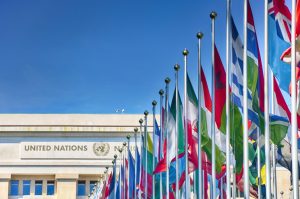
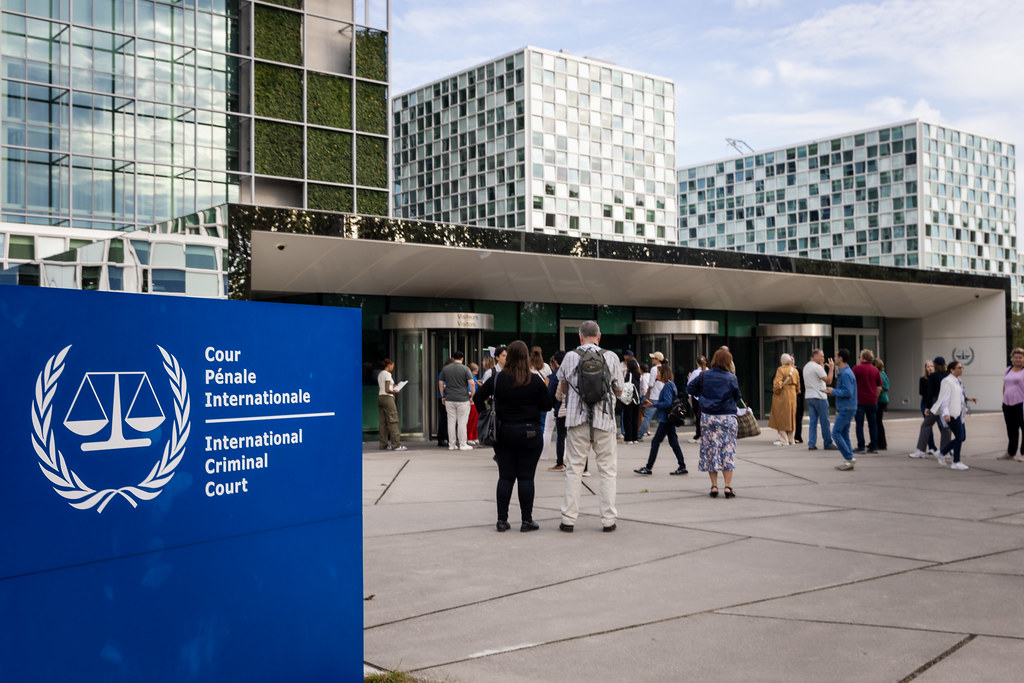
Somewhat out of the blue, on 13 July 2026, Secretary of State Rubio announced a ‘sweeping campaign’ to ‘dismantle’ the International Criminal Court. The State Department press release referred to a ‘whole-of-government response to systematically disable the ICC’s ability to operate, target American servicemen or officials, or otherwise threaten American sovereignty’. It promised that ‘[n]o diplomatic option will be off-limits.’
The State Department provided a list of six measures being considered: diplomatic calls on States to withdraw from the ICC, pressure on States ‘that partner with American law enforcement and the U.S. military or that enjoy the benefits of the U.S. security umbrella’; ‘increased scrutiny of nations that refuse to reject the ICC’s false authority while relying on U.S. assistance’; calls for States that are not parties to the Rome Statute to join the United States in its campaign; visa revocations and travel bans for ICC personnel; and ‘increased sanctions’ against the ICC and affiliated organizations.
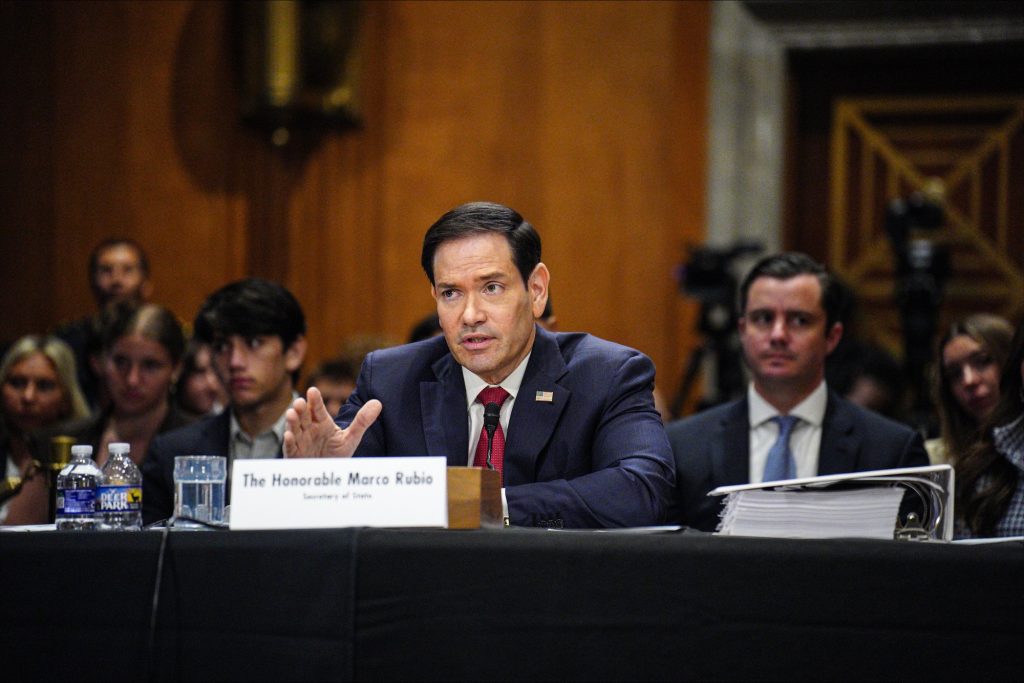
Secretary Rubio Testifies Before the Senate Foreign Relations Committee (Official State Department photo by Freddie Everett)
Twenty-four years ago, when the Rome Statute was about to enter into force, the United States launched a massive diplomatic offensive to persuade other countries to enter into treaties with the United States that would prevent them from surrendering Americans to the Court in The Hague. More than 100 such treaties were adopted. They have never been invoked. American generals began to complain about ‘unintended consequences’ of the measures being taken to punish States that refused to adopt such treaties. In effect, not only did they fail miserably to stop the Court, but the Americans also scored an own goal.
Sanctions on individuals were issued under the first Trump administration because the Prosecutor at the time threatened investigations into Israel’s conduct in Palestine. They had no real impact beyond some personal inconvenience to the two African members of the Office of the Prosecutor who were targeted, including Prosecutor Bensouda. The current sanctions also create hardship for the judges and prosecutors on the list. Those affected cannot use the banking systems in many countries because of the extraterritorial reach of United States law. They are denied access to credit cards. They cannot buy things on Amazon or book airline tickets or hotel rooms online. Travel to the United States is denied (a penance that many Canadians have happily accepted since Trump’s arrogant threats of annexation).
To be frank, the consequences of the measures imposed on judges and prosecutors are ‘first-world problems’. And there are many ways to get around them. Sanctions are like antibiotics. The more you use them, the weaker they get. Over time, the intended victims become immune. The new sanctions promised by Rubio will surely be as unproductive as those that have already been imposed. Mainly, they seem to promote anger, but also courage and dedication, among those who already work at the Court as well as those who hope to do so.
The United States has not always been so negative about international criminal justice. It was the driving force behind the post-Second World War trials in Nuremberg and Tokyo, as well as the more modern versions, for the former Yugoslavia and Rwanda. At times, it has even referred positively to the International Criminal Court. In March 2022, at the initiative of Senator Lindsay Graham, a Trump loyalist, the United States Senate adopted a resolution that ‘encourage[d] member states to petition the ICC or other appropriate international tribunal to take any appropriate steps to investigate war crimes and crimes against humanity committed by the Russian Armed Forces and their proxies and President Putin’s military commanders, at the direction of President Vladimir Putin’.
The government of the United States welcomes international justice when it is used to attack its enemies and pursue its strategic interests. That’s why it has a problem with the International Criminal Court. The drafters of the Rome Statute conceived of an institution that would be independent of political control. One investigation may align with the interests of the United States, like that of Russia, while others may run counter to them, like that of Israel. That’s justice at work rather than weaponizing international law to serve political purposes.
Even some of the powerful States that support the Court may stray over the line and threaten the Court’s independence and impartiality. For example, Germany’s Chancellor said he thought Netanyahu might visit his country without fear of arrest. He must have forgotten that Germany’s head of state hasn’t been able to interfere with the country’s criminal justice system since 1945. But the Western countries that support the Court remain fully devoted to the institution. Inept diplomats like Rubio, Kushner, and Witkoff are unlikely to persuade them to change their attitude.
It is not clear what provoked Rubio’s dramatic statement. Since issuing the arrest warrants against Netanyahu and Gallant, in late 2024, the Court has done little, if anything, to directly threaten nationals of the United States. However, arrest warrants are now issued confidentially. Rubio may have learned, perhaps through his spies, of something afoot within the Court that is not known publicly.
From the United States’ standpoint, there is certainly cause to be concerned, as Ken Roth explained in the Guardian. Nationals of the United States at the highest levels could be charged with violations of the Rome Statute for complicity in Israel’s genocide of the Palestinians. It is also possible that Iran, which is not a member of the Court, could nevertheless make a declaration giving the Court jurisdiction over the attacks on civilian objects that have taken place and that are being threatened. Acts of American officials could also fall within the scope of article 70 of the Rome Statute, making punishable ‘[r]etaliating against an official of the Court on account of duties performed by that or another official’.
Rubio may perceive that the Court is particularly vulnerable, making a renewed attack timely. Indeed, the Court is going through a rough patch. The Prosecutor, Karim Khan, is currently suspended. A special session of the governing body, the Assembly of States Parties, is scheduled on 24 July 2026. It will decide whether to remove him from office. The disciplinary proceedings have been rather grotesque, and there is little doubt that, in addition to allegations about his private life, Khan’s initiative in prosecuting Israeli leaders is a factor in the campaign against him.
Since Khan’s mandate began in June 2021, the Court has not been very productive. In The Hague, the courtrooms are empty most days. No trials have been underway for many months, and none are planned before December. Nevertheless, the enormous excitement about the issuance of arrest warrants against Netanyahu and Gallant confirms the high expectations for an institution cherished by global civil society.
The creation of an international criminal court has been on the agenda since 1920, when the Treaty of Sèvres contemplated the creation of such an institution by the League of Nations to try Ottoman leaders for crimes committed against the Armenians. The adoption of the Rome Statute in 1998 was a significant step in the progressive development of international law and international institutions. It is not just the International Criminal Court that Rubio and Trump seek to ‘dismantle’. Nor is it American sovereignty that they seek to protect, despite their claims that this is the motivation for the new campaign. The International Criminal Court is a manifestation of the exercise of sovereignty by the 125 States Parties to the Rome Statute. It is their sovereignty that is under attack. The ‘institution’ that they seek to dismantle is international law that, in the words of Thucydides, is the increasingly formidable obstacle to the strong doing what they can.