By: Mireille Rebeiz, PhD, SJD
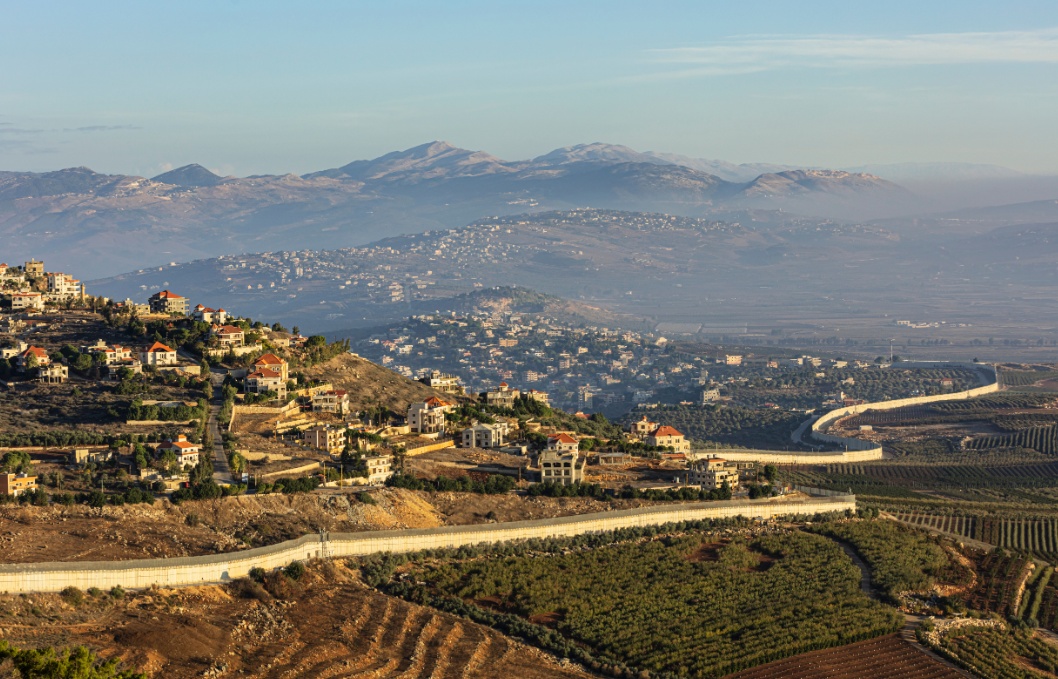
Israel and Lebanon have a long history of armed conflicts and mutual hostility. The establishment of the state of Israel in 1948 led to the dispossession and displacement of over 700,000 Palestinians out of their lands into neighboring countries. This destabilized the region and triggered a series of wars. Since 1978, Israel has invaded Lebanon six times, and today it occupies over 10% of its lands.
In 2026, Lebanon and Israel held historic seven rounds of peace-talk negotiations. Brokered by the United States, these talks aimed to discuss the disarmament of Hezbollah, the withdrawal of the Israeli forces from the occupied Lebanese south, and the settlement of borders’ dispute. A new round of negotiations was set to take place in Italy early September but are now postponed to mid-September.
No official announcement was made, and to this date, the fate of the negotiations remains unclear, raising the question of whether they are just stalled or entirely dead.
Seven Rounds of Negotiations
For a long time, Lebanon and Israel – technically at war – did not engage in direct negotiations. In a historical move, a first meeting was held in Washington D.C on April 14, 2026. Hosted by Secretary of State, Marco Rubio, the talks focused on the importance of disarming Hezbollah, Israel’s withdrawal from south Lebanon, and the need for a political agreement that recognizes the right of the two states to live in peace.
On April 23 and May 14 -15, a second and third round of talks took place in Washington D.C., with President Trump chairing the April meeting. In addition to the demands above, Lebanon insisted on the imminent need for a ceasefire. Israel agreed, and the ceasefire entered into effect on April 16.
May 29 marks a shift in the negotiations. This round involved Lebanese, Israeli, and American military delegations meeting at the Pentagon.
In the fourth round of negotiations, which took place in Washington D.C on June 2 and 3, parties discussed the creation of “pilot zones,” where Israeli troops would gradually withdraw from south Lebanon and the Lebanese Armed Forces would take over. The official agreement of this plan – called the Trilateral Framework – was signed in the fifth round of negotiations on June 23, 24, and 25.
The sixth and seventh rounds of negotiations happened in Rome in mid-July and early August. The discussions focused on the implementation of the Trilateral Framework and its details. The negotiations did not necessarily fail, but they were not successful either for there were several points of contention.
Points of Contention
While some hailed the success of these historical negotiations, others focused on their shortcomings. For instance, the Trilateral Framework did not set a firm timeline for Hezbollah’s disarmament and Israel’s withdrawal, leaving the agreement open to interpretation. The risk is grave here as Hezbollah could remain armed and Israel could continue occupying south Lebanon.
This concern is not just speculation. For decades, Israel wanted to occupy and annex south Lebanon. Recently, Israeli Minister of Foreign Affairs, Gideon Sa’ar, posted on X a map of the Middle East, one that is riddled with errors and that includes south Lebanon as annexed Israeli territories. The post was deleted within 24 hours. This came at a time when there are calls for Israeli settlements in south Lebanon. In fact, some settlers have stepped into Lebanese borders, but the Israeli forces escorted them out.
The request for an international force on Lebanese soil recalls the creation of the Multinational Force in Lebanon (MNF), a peacekeeping coalition, as well as the United Nations Interim Force in Lebanon (UNIFIL). In 1982, Israel launched “Operation Peace for Galilee,” invaded Lebanon, and imposed a brutal siege on Beirut that killed over 17,000 Lebanese and Palestinian civilians and fighters.
As a result, Lebanon requested help from the United States. In collaboration with France, the United Kingdom, and Italy, the United States created the MNF. It was asked to help restore peace in Lebanon and escort Palestinian fighters outside Lebanon and into Tunisia. While the relocation of Palestinian fighters was successful, the presence of the MNF ended in tragedy with a twin terrorist attack on the American barracks and the French Drakkar building resulting in the death of 241 American service members and 58 French paratroopers. To this day, the Beirut barracks bombing of 1983 remains the deadliest single-day attack on the Marine Corps since the battle of Iwo Jima in 1945. Evidence suggests that Iran and Hezbollah were involved in these attacks.
As to the UNIFIL, originally created by Security Council of March 1978 to confirm Israeli withdrawal from Lebanon, it continues to operate in Lebanon. Its mandate has been extended and adjusted over time, but overall, it remains restricted to monitor Lebanese – Israeli borders and implementation of ceasefire. It also offers humanitarian assistance to the communities affected by war. Today, the UNIFIL is scheduled to withdraw from Lebanon in December 2026, and it does not seem that there is a plan to replace it.
Another point of contention relates to the body responsible for overseeing the disarmament of Hezbollah. While the Trilateral Framework discussed the possibility for an international force to oversee both this disarmament and Israel’s withdrawal from south Lebanon, the parties have not reached an agreement on which countries will participate.
On several occasions, President Trump mentioned that Syria could play an important role in Lebanon and disarming Hezbollah. However, this proposal is emotionally triggering for most Lebanese. For nearly three decades, Syria occupied Lebanon. Under the Al-Assad dictatorship, the Syrian presence in Lebanon was accompanied with severe human rights violations: forced disappearances of Lebanese opposition figures, political assassinations, arbitrary detention and torture, extrajudicial killings and violence, and suppression of freedom of speech and freedom of the press. And in 2005, Syrian troops were forced out of Lebanon after the assassination of Prime Minister Rafic Hariri and the Cedar Revolution.
Furthermore, the Trilateral Framework does not include a complaint mechanism. It is unclear what would happen if Hezbollah were disarmed but Israel refuses to withdraw from south Lebanon. There is no formal system in place to receive, investigate, and resolve disputes.
Lastly, the Trilateral Framework included exchange of prisoners. Israel asked Lebanon to locate the remains of Israeli service members who were killed or disappeared during the Lebanese civil war. As for Lebanon, the state requested the safe return of all Lebanese kidnapped into Israel. This is a complex situation for several reasons. First, it might be hard for Lebanon to locate the bodies of combatants killed in the 1970s and 1980s. Second, Israel kidnapped farmers, factory workers, and shepherds from south Lebanon as well as Hezbollah fighters. Legally, the status of these two groups differs between civilians and combatants, and Israel might insist on distinguishing between them and might refuse the return of some.
Negotiations Stalled or Dead?
International pressure is mounting against Israel. United Nations agencies and Human rights organizations such as Amnesty International, B’Tselem, and Human Rights Watch have openly labelled the atrocities in Gaza as genocide. New York Magazine recently stated that the term “genocide” is an accurate description of Israel’s actions in Gaza.
The International Criminal Court issued an arrest warrant against Prime Minister Benjamin Netanyahu who is currently at odds with President Donald Trump.
Internally, there are protests in Israel against Netanyahu’s national policies. These cannot be dismissed as the country is holding its elections in October. And yet, Israel has not changed its policy regarding Lebanon. In fact, despite the ceasefire in place since April 2026, Israel continues to bomb south Lebanon, kill civilians, and burn villages. This raises the serious question whether the negotiations are stalled or entirely dead.
Lebanon is trying to come back to the negotiations table. On July 21, Lebanon’s President, Joseph Aoun, met with President Trump to move the Trilateral Framework forward. In August, he met with Pope Leo XIV and the Italian Prime Minister, Giorgia Meloni, to reaffirm Lebanon’s commitment to peace in the region. However, Lebanon is also facing its own challenges.
Israel’s continuous bombardment of the south and violation of Lebanon’s airspace and maritime borders show the weakness of the state in asserting its sovereignty and defending its territory. For Hezbollah supporters, this means that only Hezbollah can guarantee their safety against Israeli aggression and their return to their villages.
The challenge here goes beyond the image of the state to indicate the absence of a Lebanese consensus regarding these negotiations. While many Lebanese are tired of wars and want peace in the region, Hezbollah supporters – who are the minority – view these negotiations as a top-down measure, one that is cowardly and traitorous.
In a recent televised address broadcasted on Hezbollah’s television channel Al-Manar, Hezbollah Secretary General Naim Qassem openly rejected the Trilateral Framework and said that Hezbollah will not surrender. He called the agreement “illegitimate” and rejected Israel’s gradual withdrawal from south Lebanon and the pilot zones.
Hezbollah made it clear that its allegiance lies with Iran. This was clear in the latest confrontation between the Lebanese authorities and the Iranian Ambassador to Lebanon, Mohammad Reza Sheibani.
In March, Youssef Raggi, Lebanon’s Foreign Minister, and strong critic of Hezbollah, declared Mr. Sheibani persona non grata for Iran’s interference in Lebanese internal affairs. However, despite the withdrawal of his accreditation, Mr. Sheibani refused to leave and continued with some of his functions as Iranian ambassador. Under Hezbollah’s pressure, Lebanese state ended up offering Mr. Sheibani a six-month residency as civilian.
Both Lebanon and Israel are facing international and domestic challenges. The next round of negotiations may be held mid-September in Rome. However, the on-going genocide in Gaza, the escalation of settlers’ violence in the West Bank, and Hezbollah’s categorial rejection of the Trilateral Framework cast a long shadow over these negotiations, which seem to be stillborn.
But despite this skepticism, one wild card remains: the U.S-Iran war and its impact on Hezbollah and the region.