June 30, 2026 – Toronto: The International Institute for Genocide and Human Rights Studies (A Division of the Zoryan Institute) welcomes the decision of the Cabinet of the State of Israel to formally recognize the Armenian Genocide and looks forward to its ratification by the Knesset.
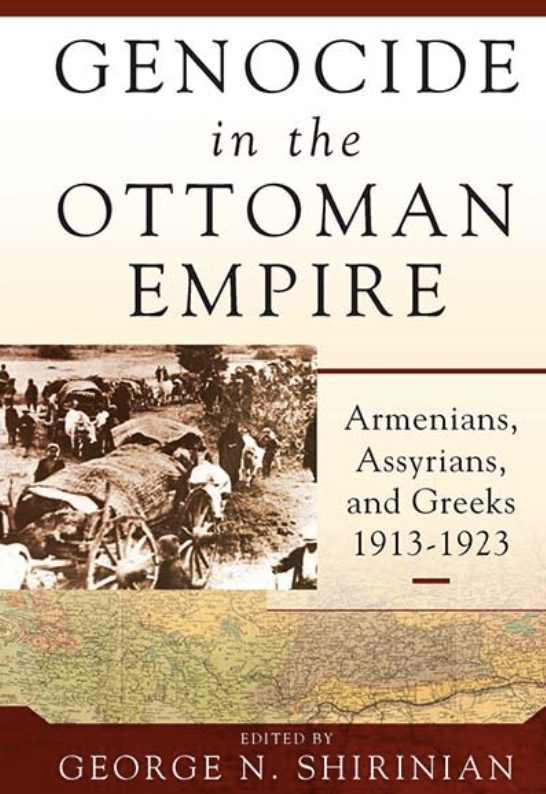
For more than a century, the destruction of the Armenians of the Ottoman Empire, known to Armenians as the Medz Yeghern, together with the persecution and destruction of other Christian populations of Anatolia, including Greeks and Assyrians, totalling 4.5 million Christians, has been documented through an extensive body of historical evidence.
We hope that Israel’s decision acknowledges that record and represents an important moment in the continuing pursuit of historical truth, justice, and the universal principles embodied in the Convention on the Prevention and Punishment of the Crime of Genocide.
This recognition is also the culmination of decades of work by Israeli scholars, intellectuals, parliamentarians, and public figures who insisted that historical truth should never be subordinate to political circumstance. Since the early 1980s, Prof. Israel Charny, Prof. Yair Auron, Prof. Yehuda Bauer, former opposition leaders Yossi Sarid and Haim Auron, and many others, including Zoryan Institute’s own board members, have advanced recognition through scholarship, public advocacy, and parliamentary initiatives. Although their efforts did not immediately succeed, they helped shape public discourse and made enduring contributions to Armenian Genocide Studies and Israel’s decision to acknowledge it.
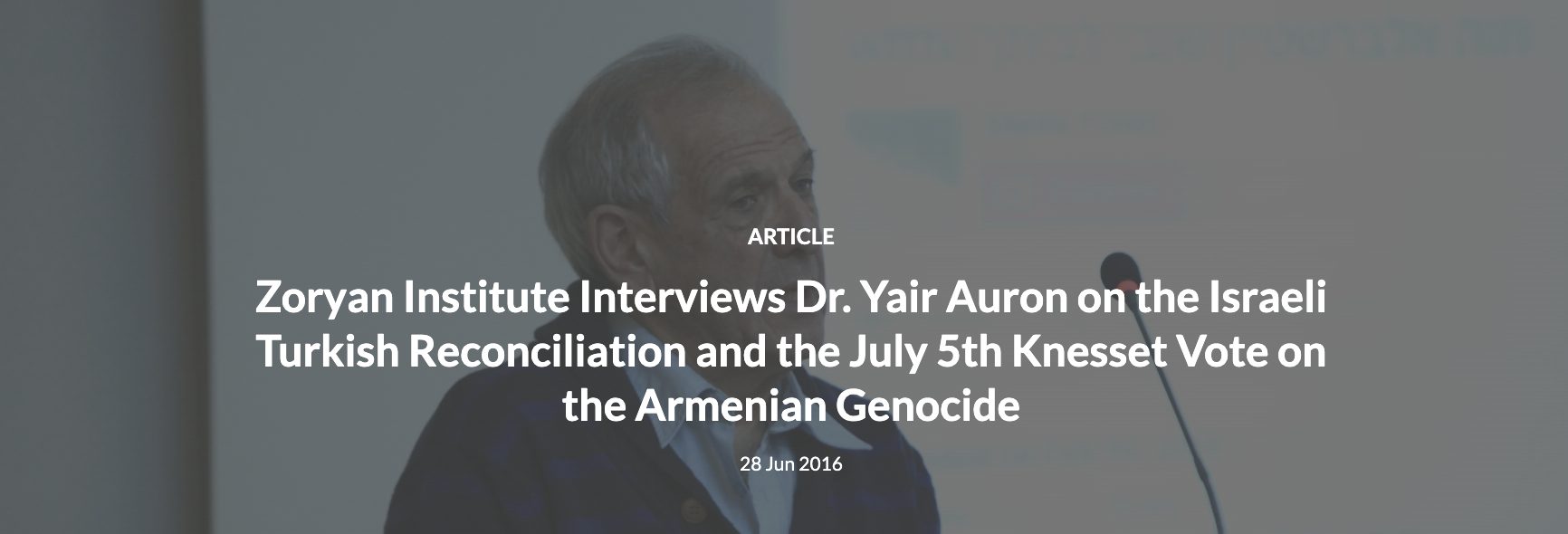
In a 2016 interview with the Zoryan Institute, Professor Yair Auron of the Open University of Israel expressed the moral conviction that guided this work:
“It is past time that Israel officially recognizes the Armenian Genocide… if we need to combine Israeli experience with that of others in order to prevent genocide in the future.” Reflecting on the consequences of continued denial, he added, “This double standard is very hard for me, as a human being, an Israeli Jew, and as a scholar, to accept. It is hard to see Israel trade on sympathy for the Holocaust but deny the genocide of others.”
His words remain more relevant today than they were a decade ago.
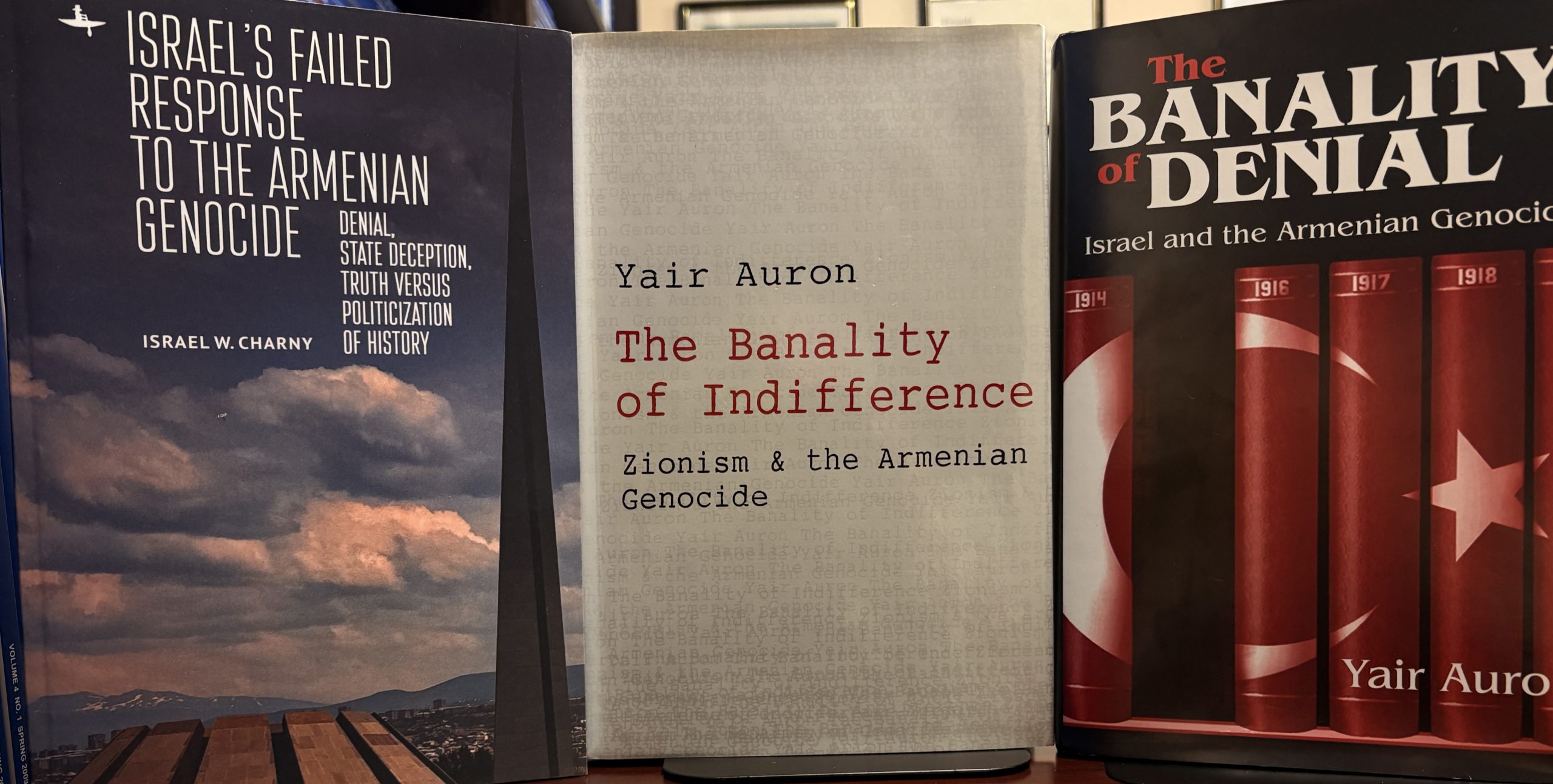
The scholarly foundation for recognition has been built over many decades by Israeli, Armenian, Turkish, and international researchers. Important contributions include Zoryan Institute publications by Yair Auron, The Banality of Denial and The Banality of Indifference, as well as Israel Charny’s Israel’s Failed Response to the Armenian Genocide published by Academic Studies Press, the research of Roger W. Smith on genocide denial, Wolfgang Gust’s documentary collections from the German Foreign Ministry Archives (1915-1916), and the principled work of Turkish intellectuals and journalists, including Uğur Ümit Üngör, Fikret Adanir, Halil Berktay, Fatma Müge Göçek, Taner Akçam, Hasan Cemal, the grandson of Ahmed Djemal Pasha one of the three rulers of Ottoman empire at the time the Armenian Genocide took place, and finally Mehmet Ali Birand a prominent columnist for the Hürriyet Daily News in Turkey, who acknowledged the historical record despite considerable political pressure.
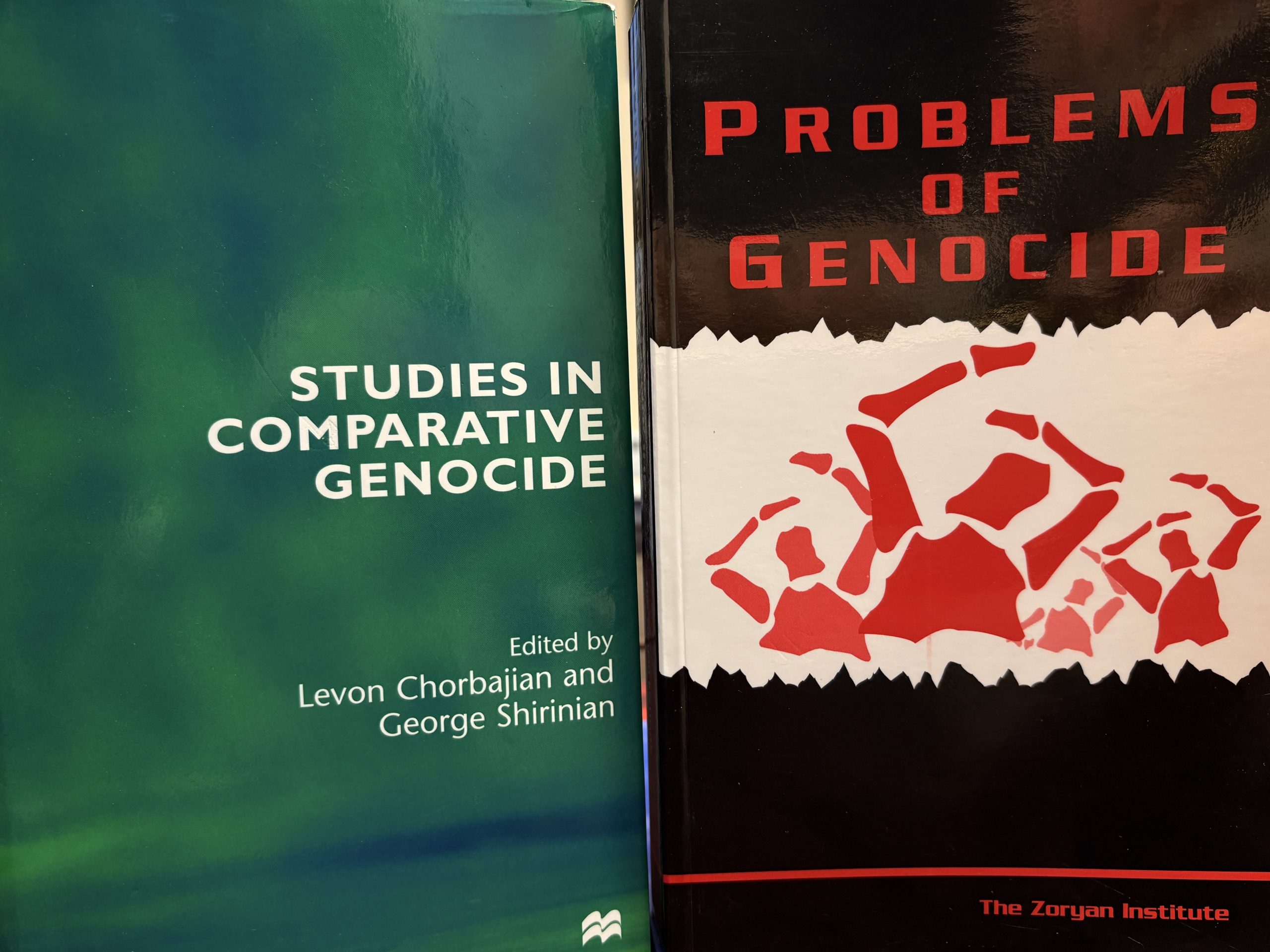
During the late 1970s and especially the 1980s, scholars including Leo Kuper, Irving Louis Horowitz, Helen Fein, Israel Charny, Yehuda Bauer, and Frank Chalk helped transform genocide studies from a predominantly Holocaust-centered inquiry into a mature comparative discipline. Building upon Lemkin’s original framework, they established an intellectual tradition grounded in historical evidence, legal analysis, and multidisciplinary research. The Zoryan Institute has long maintained that genocide studies must remain an independent, multidisciplinary, and comparative field of inquiry rooted in the vision of Raphael Lemkin. Alongside these pioneers of genocide studies, Vahakn Dadrian and institutions such as the Zoryan Institute have played a vital role in deepening scholarship on the Armenian Genocide and reinforcing the importance of independent, comparative approaches to the study of mass atrocity.
While it may be possible that this extensive body of scholarship has helped lead Israel’s government to this decision, the timing of this particular appeal for recognition of the genocide raises some important questions. Could this recognition be considered a cynical gesture whose motivation is very far removed from any real search for historic justice? Israel itself is inflicting upon the people of Palestine a campaign that one may consider very similar to what the Ottomans did to the Armenians in 1915. Unfortunately, if this is the motivation for the recognition, then the weaponizing of the Armenian Genocide is an insult to the victims of all genocide and to all who cherish their memory.
As an institute dedicated to the integrity of scholarship and independence of genocide and human rights studies, we reaffirm our conviction that the lessons of the Armenian Genocide, like those of all genocides, past, current and ongoing, must be approached through rigorous historical, legal, and comparative analysis to ensure that Israel’s acknowledgement of the Armenian Genocide is not weaponized for political objectives against third parties.
Only by defending historical truth, preserving scholarly independence, and consistently upholding international law, by the major powers, to prevent states from using genocide as a solution to political challenges, can we hope to prevent current and future atrocities.
– The International Institute for Genocide and Human Rights Studies (A Division of the Zoryan Institute)