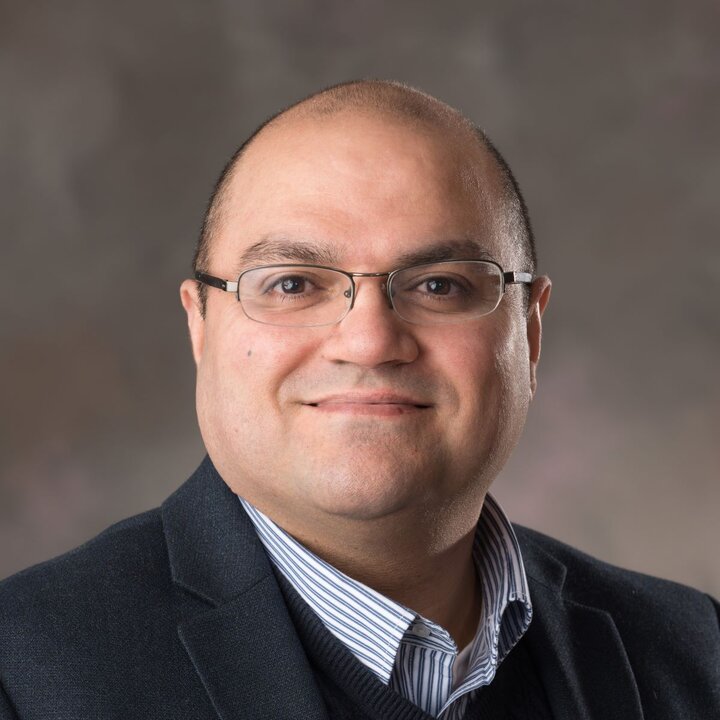
April 29, 2026: The Zoryan Institute proudly congratulates its longtime Academic Board Member, Bedross Der Matossian, on being awarded a 2026 Guggenheim Fellowship.
Widely regarded as one of the most prestigious honours for scholars and artists in the United States, the Guggenheim Fellowship recognizes individuals who have demonstrated exceptional capacity for productive scholarship and enduring intellectual contribution. This distinction affirms Prof. Der Matossian’s influential role in advancing the study of the modern Middle East, intercommunal relations, and comparative histories of mass violence.
Prof. Der Matossian serves on the faculty of the University of Nebraska-Lincoln, where his teaching and research explore the transformation of the late Ottoman Empire and the emergence of modern nation-states. His scholarship is distinguished by a comparative approach that brings Armenian history into dialogue with broader regional and global perspectives, including insights from Jewish studies.
A leading authority on the Armenian Genocide, Prof. Der Matossian situates this history within the wider political, social, and intellectual currents of the early twentieth century. His work examines how diverse communities, including Armenians, Jews, and Muslims, navigated reform, nationalism, and crisis, offering a nuanced understanding of coexistence and conflict in plural societies.
Among his notable publications are Shattered Dreams of Revolution, which analyzes interethnic relations during the Young Turk era, and Denial of Genocides in the Twenty-First Century, a significant contribution to the global study of genocide recognition and denial.
Through his scholarship, Prof. Der Matossian has helped bridge Armenian studies with Jewish studies and broader Middle Eastern history, enriching academic discourse while fostering dialogue across communities. His work continues to shape contemporary understanding of historical trauma, memory, and the challenges of diverse societies.
The Zoryan Institute celebrates this achievement and looks forward to Prof. Der Matossian’s continued contributions to genocide studies as an independent field in academia and to the global community of scholars and educators.