
Day 6: The Unravelling of Ottoman Multiculturalism
From Diversity to Disappearance of Minorities
In earlier discussions, we explored how the Ottoman Empire managed diversity through the millet system, which granted religious communities, including Armenians, Greeks, and Jews, a degree of cultural and administrative autonomy. While this system enabled coexistence and even periods of economic and cultural flourishing, it was not based on equality. Instead, it maintained a clear hierarchy in which non-Muslims remained subordinate to Muslim authority.
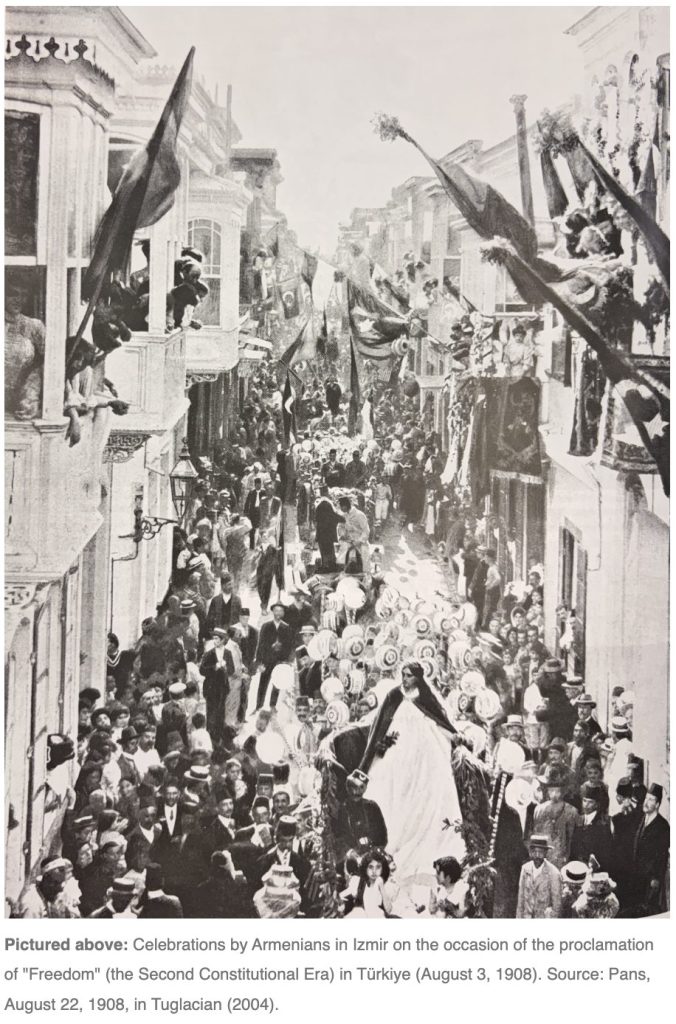
The imbalance of equality is key to understanding a much larger historical transformation. From the late Ottoman period into the modern Turkish Republic, the share of non-Muslims in Anatolia fell dramatically—from roughly 20–25% of the population around 1914 (about 3–4 million people out of 17-18 million) to well under 1% today. This profound demographic shift did not occur suddenly or for a single reason. Rather, it unfolded over decades through a combination of structural inequality, war, deportations, state policy, genocidal acts against Armenian, Assyrian, and Pontic Greek communities, and population exchange between Turkey and Greece.
A Diverse Society Under Strain
On the eve of the First World War, Anatolia remained a mosaic of peoples. Armenians, Greeks, Assyrians, Jews, and Muslims lived side by side, with non-Muslims comprising roughly a quarter of the population. Yet beneath this diversity lay deep inequalities and abuses against non-Muslim communities, embedded in everyday life. Non-Muslims paid additional taxes, faced legal disadvantages, and were subject to social restrictions that reinforced their lower status. For example, “If a Christian on horseback encountered a Muslim on horseback, the Christian must dismount until the Muslim passes by. Greeks, Armenians and Jews were distinguished respectively by sky blue, dark red (later red) and yellow hats, and by black, violet, and blue slippers. Violators of the clothing laws could be executed.” These practices helped preserve order, but they also entrenched resentment and division over time. Despite these tensions, the empire had maintained a relative balance for centuries. However, by the 19th century, that balance and stability began to erode under internal and external political, economic, and social pressures.
Reform, Resistance, and Rising Suspicion
As the Ottoman Empire weakened militarily and economically relative to European powers, its leadership introduced the Tanzimat reforms (1839–1876). These reforms aimed to modernize the state and establish legal equality among subjects, regardless of religion. While many non-Muslim minority communities welcomed these changes, the reforms disrupted long-standing hierarchies. Some Muslim groups viewed them as a loss of privilege, while the state grew increasingly wary of minority populations—especially as European powers began positioning themselves as “protectors of Christian” communities within the empire.
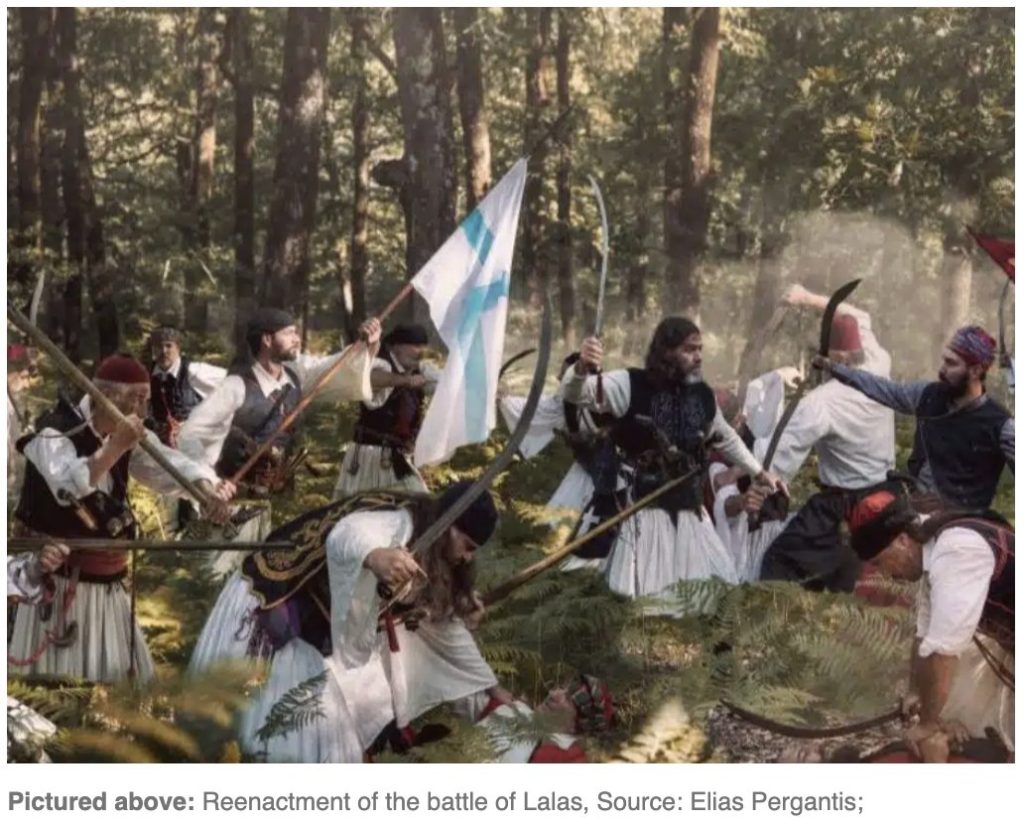
Events such as the Greek War of Independence (1821–1829) and the Russo-Turkish War (1877–1878), followed by international pressure stemming from the Treaty of Berlin (1878), intensified these suspicions. Armenians, in particular, came to be viewed by Ottoman authorities not as a loyal community but as a potential political threat. At the same time, nationalism was reshaping identities across the empire. Movements such as the Armenian Enlightenment (“Zartonk”) fostered new forms of collective identity rooted in language, history, and shared experience. While these developments strengthened communities internally, they also heightened state anxiety about separatism, even though Armenians never sought separation.
Escalation to Violence
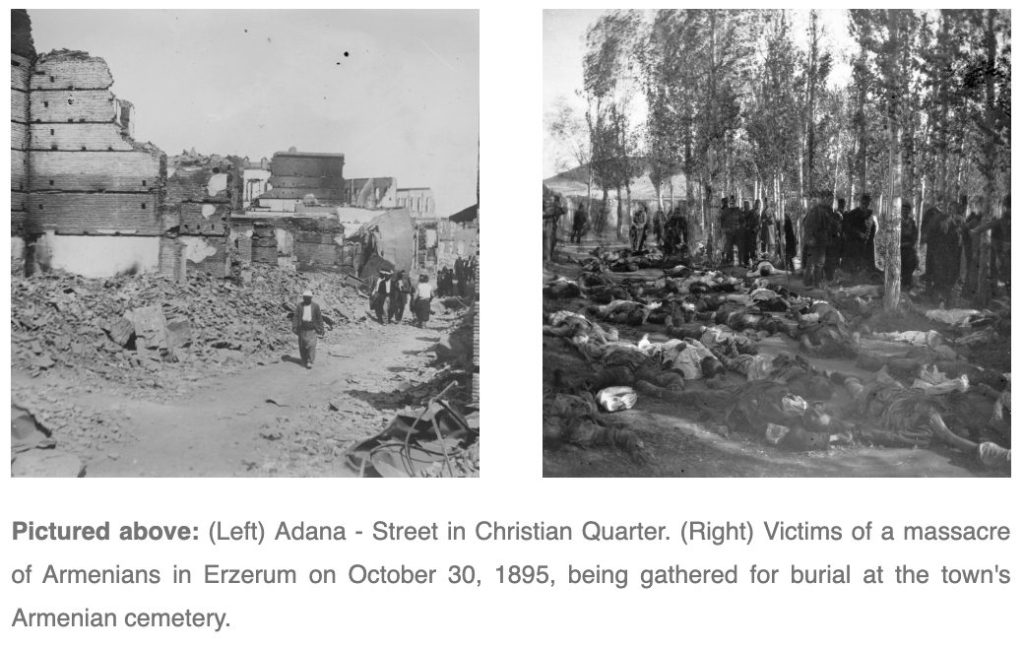
By the late 19th century, these tensions erupted into large-scale violence. The Hamidian massacres (1894–1896) resulted in the deaths of an estimated 200,000 to 300,000 Armenians and marked a turning point in state-minority relations. This was followed by the 1909 Adana massacres. These were a wave of violent attacks against Armenians in the Adana region of the Ottoman Empire, in which tens of thousands were killed. They were seen as a continuation of long-standing persecution and a direct result of rising nationalist tensions, economic rivalries, and hostility toward Armenians following the upheaval of the Young Turk Revolution, which had initially raised hopes for equality but instead led to backlash from conservative and local forces who viewed Armenians as a threat. Armenians generally argue that the violence was not merely spontaneous but enabled by local authorities and elements of the military, while the Committee of Union and Progress (the Young Turks government) officially claimed to restore order by sending troops and reasserting control. However, from this perspective, their response was too slow and ineffective, and in some accounts complicit, as they failed to adequately protect Armenians or prevent the massacres from spreading.
Medz Yeghern – Armenian Genocide
The most devastating rupture occurred during the First World War. Beginning in 1915, the Armenian population was subjected to mass deportations and planned killings, widely recognized as the Armenian Genocide. At the same time, many Assyrians (Syriac Christians) were killed or displaced in events often referred to as the Sayfo. Similarly, Pontic Greek communities were massacred in the province of Trabzon on the southern section of the Black Sea. Together, these events removed a substantial portion of Anatolia’s Christian population, from roughly 20–25% around 1914 (about 3–4 million people out of 17-18 million) to well under 1% today.
For an overview of the events of the Armenian Genocide of 1915, the Institute welcomes you to watch this short video: