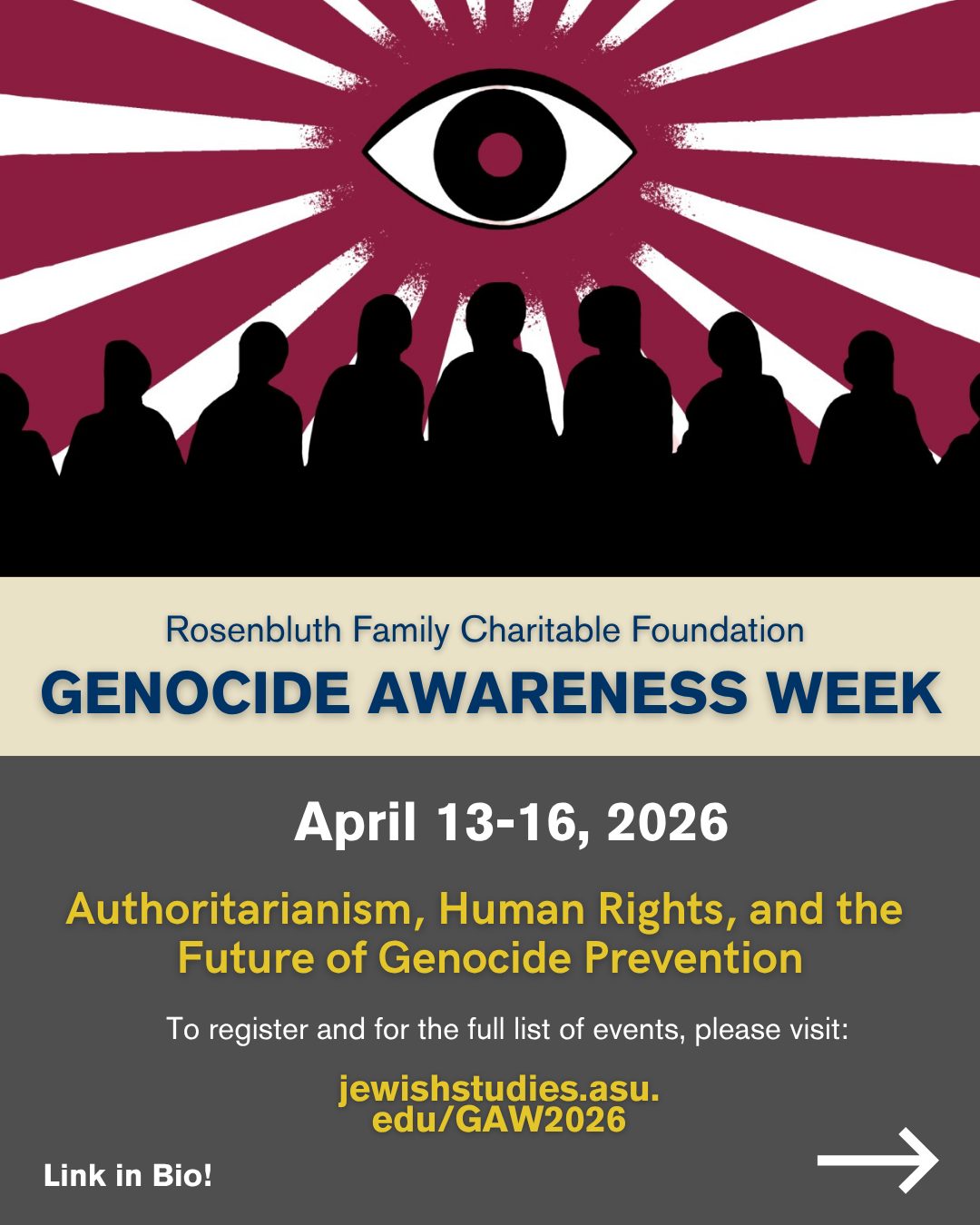
TORONTO, ON, March 20, 2026: As the world faces a resurgence of extremism, exclusionary nationalism, and democratic erosion, the urgency of genocide awareness and education continues to grow. This April, the Zoryan Institute returns to Arizona State University for Genocide Awareness Week 2026, marking its fourth consecutive year participating in the conference. The Institute will contribute a student and scholar session titled “The Future of Genocide Education,” framed under this year’s theme, Authoritarianism, Human Rights and the Future of Genocide Prevention.
This student and scholar session, taking place on Wednesday, April 15, from 3:00 – 4:30 pm (Mountain Standard Time) in partnership with ASU Jewish Studies, this session will invite open dialogue between students and scholars on the challenges of teaching genocide today. Together, participants will explore how rising authoritarianism and the global retreat from democracy are reshaping genocide education and its future trajectory.
“Zoryan Institute’s footprint on this year’s conference is significant and sizable.” said Dr. Timothy Langille, ASU Faculty Member and lead organizer of Genocide Awareness Week. “The Zoryan Institute’s presence will extend across the week through the participation of prominent scholars and contributors”, including Dr. Maureen Hiebert, Dr. Alex Alvarez, Dr. Bedross Der Matossian, Dr. Henry Theriault, Dr. Jim Waller, Dr. Amy Sodaro, and representatives of the Institute, Megan Reid and Semhale Tsehaye.
The Zoryan Institute and its academic journal, Genocide Studies International, have been a critical voice addressing how genocide education needs to evolve, not only to be more effective, but to address the ever-changing global geo-political landscape. In 2023, the Zoryan Institute hosted a conference in partnership with Rowan University on the Future of Genocide Education, which was subsequently published in a special issue of the journal (Vol. 16, No 1), released last Spring. The issue explores critical perspectives on genocide education and student engagement.
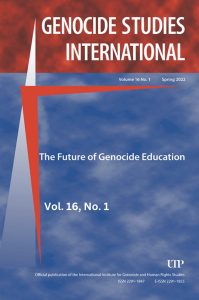 Dr. James Waller, a contributor to both the GSI special issue and the Rowen Conference, emphasizes the importance of genocide education in the context of contemporary U.S. society in particular.
In his article, titled “The Urgency of Fostering Student Agency in Genocide Education,” Waller writes: “This contemporary political and social context of the United States requires us to approach genocide education as an ‘us’ problem and not a ‘them’ problem. Our exceptionalism has led us to think of genocide as a foreign policy issue and not a domestic one.”
K.M. Greg Sarkissian, President of the Zoryan Institute, further emphasized the importance of the theme of this year’s conference and the Institute’s contribution: “At a time when authoritarianism is rising globally, fostering critical, evidence-based genocide education is essential to safeguarding human rights and shaping informed future generations.”
The Zoryan Institute reaffirms its commitment to advancing genocide education, public dialogue, and scholarly engagement worldwide through its ongoing collaboration with various public and scholarly organizations, like Arizona State University.
 From left to right: Dr. Alex Alvarez, Dr. Amy Sodaro, and Dr. Henry Theriault