By: Mischa Geracoulis
Life happens in, with, and throughout the media—a system without a singular leader, but one in which pundits, influencers, and Big Tech billionaire-trillionaires compete to shape perceptions of reality as much, or more than, traditional mass media or ethical, investigative journalism. The dream that the internet and social media would democratize the system has collapsed. Due to private ownership of platforms, proprietary algorithms, and artificial intelligence, the world online distorts real life. And when tech firm owners pledge allegiance to strongmen, social media and internet sites become tools for censorship and repression.
This “reality” was made clear when researching for what would become part of Routledge’s focus book series on Media and Humanitarian Action. My primer, Media Framing and the Destruction of Cultural Heritage: News Narratives about Artsakh and Gaza (2025), analyzed the media framing of cultural heritage destruction in Armenian Artsakh and Palestinian Gaza from September 2023 to December 2024.
Media Framing and the Destruction of Cultural Heritage asked if how media covered the targeted destruction of cultural heritage contributed to the fate of the Armenians and Palestinians—two of the world’s largest, long-term diasporas. The book argues that news framing, news values, and disinformation influenced whether the destruction was perceived as unavoidable collateral damage, or as human rights violations warranting recourse. It contends that conventional news values are inadequate for reporting on crises and human rights violations, particularly when decisions about humanitarian intervention are at stake.
Highlighting the concepts of information framing and newsworthiness helps clarify the book’s findings. Editorial decisions involved in what and who get featured in a story—collectively understood as framing—shape public opinion, behavior, and policymaking. Framing in and of itself is not necessarily problematic, but a slanted, reductive, or decontextualized story construction limits audience understanding by emphasizing only select aspects of a situation.
Inherent in framing are the journalistic standards and news values that determine what gets media attention and how audiences perceive news. By controlling narrative presentation, framing and values become more persuasive than facts themselves. Through repetition, slanted stories effectively set and confirm political agendas, influencing what the public and policymakers will deem acceptable.
When a narrow viewpoint dominates the media landscape, it’s mistaken for truth. The work of Chimamanda Ngozi Adichie warns that the promotion of a “single story,” an overly simplistic, one-dimensional narrative, has dangerous consequences—most conspicuously so in crisis reporting. A single story amplifies biases and stereotypes, and puts forth ideas about victim worthiness and deservedness, and whether perpetrators of harm will be held accountable.
Analysis of media coverage of Armenian and Palestinian cultural heritage destruction overwhelmingly revealed single-story reporting. The most glaring partiality was in western media’s orientalist framing that discounted Armenian and Palestinian humanity and losses.
Background
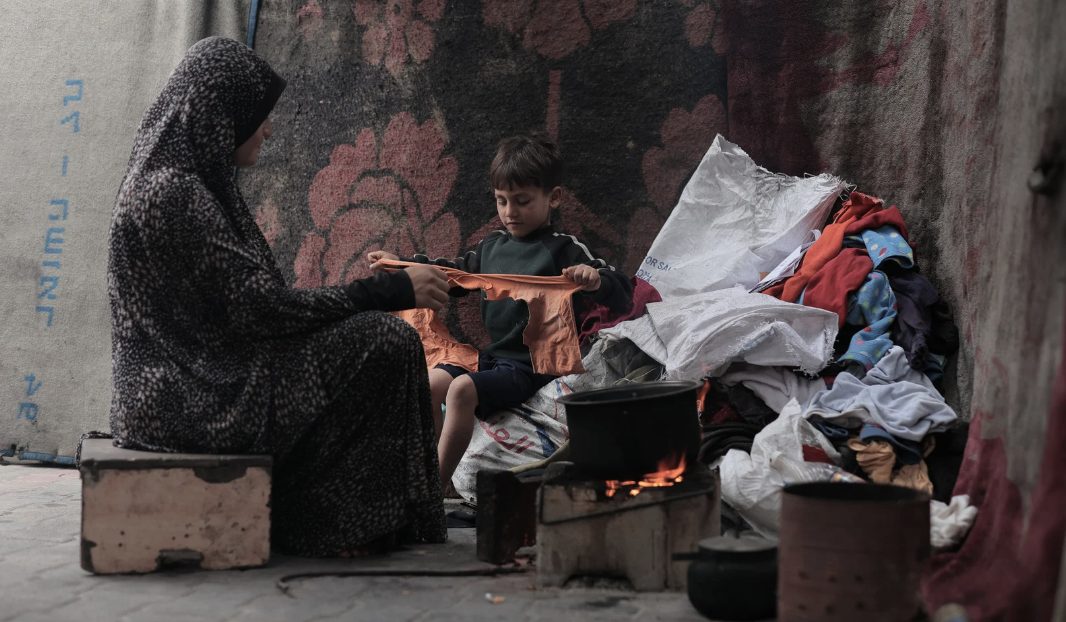
In September 2023, following Azerbaijan’s nine-month blockade of the ethnically-Armenian enclave Artsakh (also known as Nagorno-Karabagh), the Azerbaijani military launched a lightning assault on the enclave. Within a week, more than 100,000 Armenian Artsakhis had fled to neighboring Armenia, and the almost 40-year autonomous enclave was dissolved. That October, reacting to Hamas’s attack on Israel, an all-out bombardment of Gaza ensued. Though varying in scale, erasure of the two groups’ heritage happened simultaneously.
Both the Israeli and Azerbaijani regimes are adept at using media to propagate smear campaigns against Palestinians and Armenians, and propaganda touting the righteousness of an ethnostate. Each has manufactured a minoritization of their indigenous population, scapegoating them as “the enemy within,” and thereby legitimizing state-led attacks on their own citizens. Alleging existential threats, the “enemy within” narrative gained easy traction in the corporate press that circumvented journalistic ethics and human rights principles.
The book’s examination of media coverage exposed just how quickly the corporate press fell in line with the demonization and devaluation of the victims of the Israeli and Azerbaijani assaults. Under the guise of so-called objectivity, western presses showed complicity with Israel and Azerbaijan by failing to report the whole truth. In cases of destroyed Palestinian cultural heritage in Gaza and that of the Armenians in Artsakh, western news sources largely echoed official narratives and language issued from Israel, Azerbaijan, and the United States. Reports were rife with “semantic infiltration,” the rhetorical device in which a perpetrator’s language is adopted by the media. With rare exception, the only reports that contextualized history, geopolitics and facts, and explained realities on the ground came from independent or nonwestern journalists and publications with niche audiences.
Meanwhile, millennia-old Armenian and Palestinian heritage have been destroyed or are being altered to falsify authorship and advance ethnonationalist fabrications. UNESCO, the international organization created after World War II for the protection and preservation of world heritage, has taken little remedial action. By contrast, the International Court of Justice and International Criminal Court have shown greater interest in addressing these crimes against culture. Nonetheless, prosecuting heritage destruction remains a protracted process.
Outcomes
Ultimately, the book’s discoveries concur with three themes previously documented by Middle East scholar Bedross Der Matossian: perpetrator impunity, scant humanitarian intervention, and international apathy. These findings point to the ongoing authoritarian pressures that demand political loyalty, emanating a chilling effect felt round the globe. Fulfilling the “duty to protect” takes genuine political will—not loyalty to leaders—most especially among organizations that claim to be apolitical or nonpartisan.
As seen in Gaza and Artsakh, inaccurate and incomplete reporting fails not only the victims of atrocities but also the public-at-large. Political will that respects human rights and upholds the rule of law depends on an ethical press committed to reporting the truth. Although the future of Armenian and Palestinian heritage is uncertain, lessons learned from this media analysis have implications for other regions and for the accuracy of our historical record.
Conceding to political intimidation undermines trust and credibility in the media, and the media’s framing of mass atrocities will bear out for years to come. Best journalistic practices to ensure that similar destruction is understood within a human rights framework must abide by the internationally recognized ethics code, uphold journalism as public service, and prioritize human rights, social justice, and solutions values when deciding news worthiness. These approaches will automatically reframe and strengthen reporting, and align journalism with the international norms that profess universal rights and democracy.
Conclusion
When journalistic ethics are compromised by omissions, stenography, and politics, news audiences and decision-makers are deprived the information critical to forming a cogent response to crises. Repetitious, oversimplified, one-sided crisis coverage might get pickup on platforms that prize profits above humanity, but it undermines the mission of the Fourth Estate and short-circuits historical memory.
After World War II, cultural heritage was constructed as a pillar for a more balanced, internationalist world order. Leaving deliberate heritage destruction unchecked—in Artsakh, Gaza, or anywhere—betrays the vow “never again.” Safeguarding ethical, independent journalism also safeguards against authoritarian revisionism, asserts narrative multiperspectivity, and maintains the integrity of public consciousness.